
Rabbit is a lean, mild meat that takes beautifully to bold flavors. Here, it’s slowly braised in an Indian-style curry with Thai red curry paste and a touch of coconut milk until fork-tender and richly coated in sauce. Prefer chicken? Skinless bone-in thigh/leg combo works well, too.
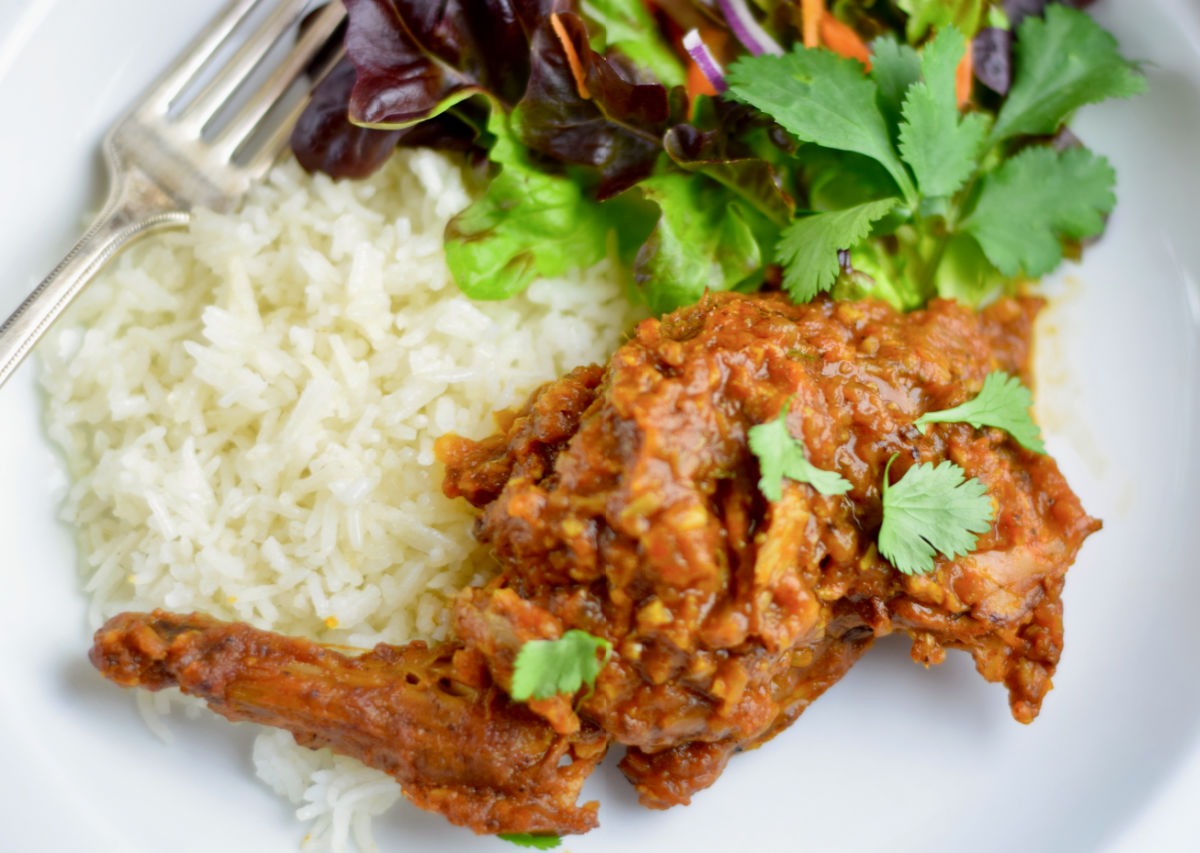
Why You’ll Love This Recipe
- A flavorful way to cook rabbit. Rabbit has a mild flavor, so it’s a lovely canvas for a richly spiced curry sauce.
- Chicken works, too. Skinless chicken thighs make an easy substitute.
- Two curry traditions in one pot. Indian-style spices meet Thai red curry paste, with a little coconut milk to round out the flavors.
- The heat is easy to adjust. Start with one tablespoon of Thai red curry paste, then add more to taste.
- Tender, sauce-coated meat. The rabbit or chicken braises slowly until it’s fall-off-the-bone tender.
How This Recipe Came About
When it comes to cooking, I’m not a traditionalist. I have no qualms about mixing cuisines. Even when I make “traditional” German recipes, like Hasenpfeffer or My Mother’s Rouladen, I make them my way—the way I like them. So when I decided to cook rabbit as something other than Hasenpfeffer, curry came to mind.
My first instinct was an Indian-style curry, with curry powder, cumin, cayenne, and turmeric—a nod to my Chicken Vindaloo and Lamb Vindaloo. But as I tasted the sauce, it seemed a bit…well, boring.
Domestic rabbit is mild, so I wanted a sauce with plenty of flavor. I kept tasting and thinking: What can I do to make this sauce sing?
Thai red curry paste was the answer. I stirred some in, then finished the sauce with a little coconut milk to soften and round out the flavors. The result is an Indian-style rabbit curry with a Thai twist—a combination that works beautifully.
Jump to:
Indian-Style Rabbit Curry with Thai Red Curry Paste
Ingredients
1 tablespoon olive oil or grapeseed oil
1 teaspoon ghee or unsalted butter
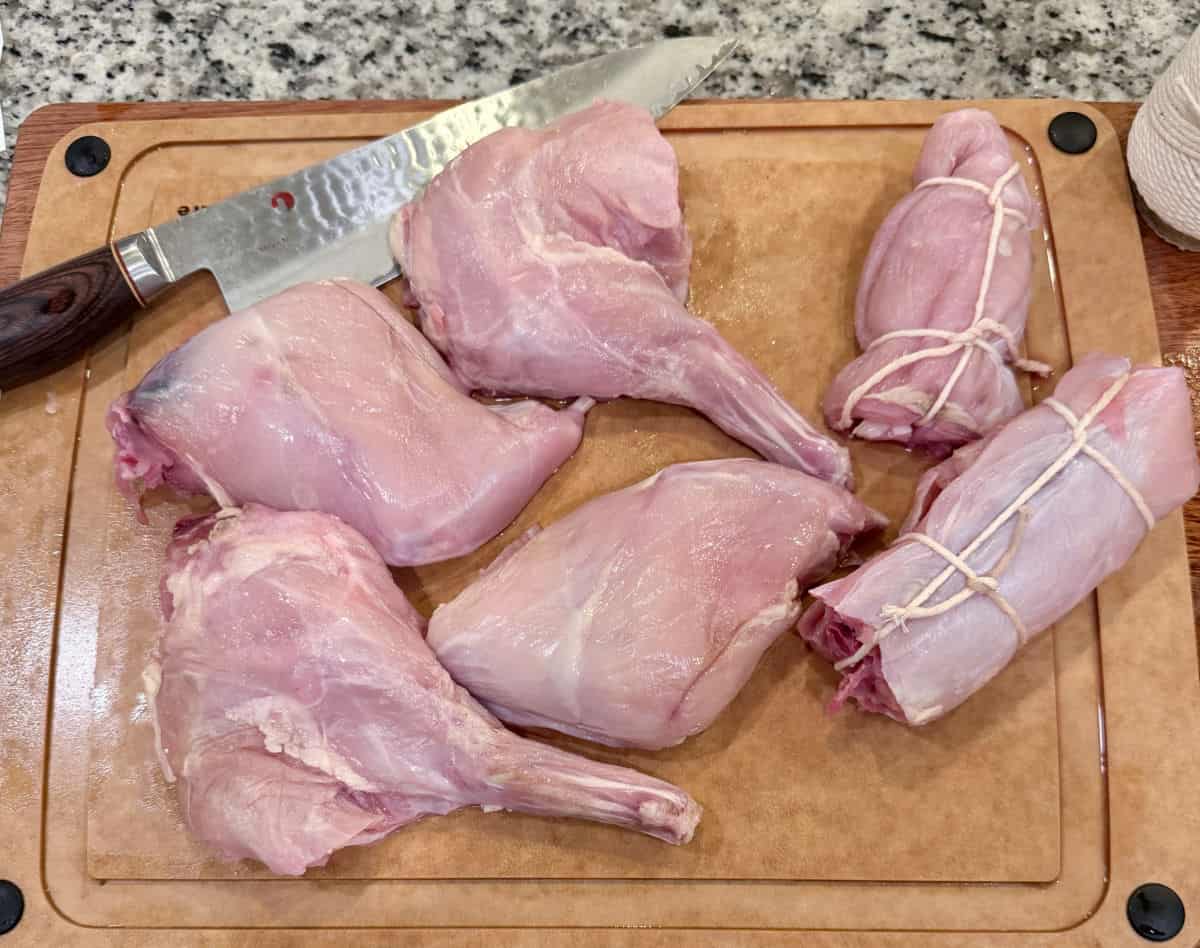
1 domestic rabbit, cut into four leg quarters; roll each side piece and tie with kitchen twine
Salt and freshly ground black pepper
1 large onion, chopped, divided (about 1½ cups)
2 tablespoons chopped fresh ginger
1 tablespoon chopped garlic
1 tablespoon curry powder, such as Madras
1 teaspoon ground cumin
½ teaspoon turmeric
1 teaspoon cayenne pepper, or to taste
2 tablespoons tomato paste
1 tablespoon Thai red curry paste, plus more to taste
2 cups homemade or low-sodium chicken broth
¼ cup coconut milk, plus more to taste
Chopped fresh cilantro, for serving (optional)
Instructions
Heat the oven to 350°F (175°C).
Prepare the Rabbit
- Pat the rabbit dry and season with salt and pepper. Heat the oil and ghee in a large Dutch oven over medium-high heat. Working in batches if needed, brown the rabbit on both sides, about 10–15 minutes total. Transfer it to a plate.
Prepare the aromatics
- While the rabbit browns, pulse half the onion with the ginger and garlic in a food processor until finely minced.
Build the curry base
- Reduce the heat to medium. Add the remaining chopped onion to the pot and cook until golden, about 5 minutes. Add the minced aromatics and cook for 2–3 minutes, stirring.
Bloom the spices
- Stir in the curry powder, cumin, turmeric, cayenne, and tomato paste. Cook for about 2 minutes, stirring constantly. Stir in 1 tablespoon Thai red curry paste and the chicken broth; bring to a simmer.
Braise until tender
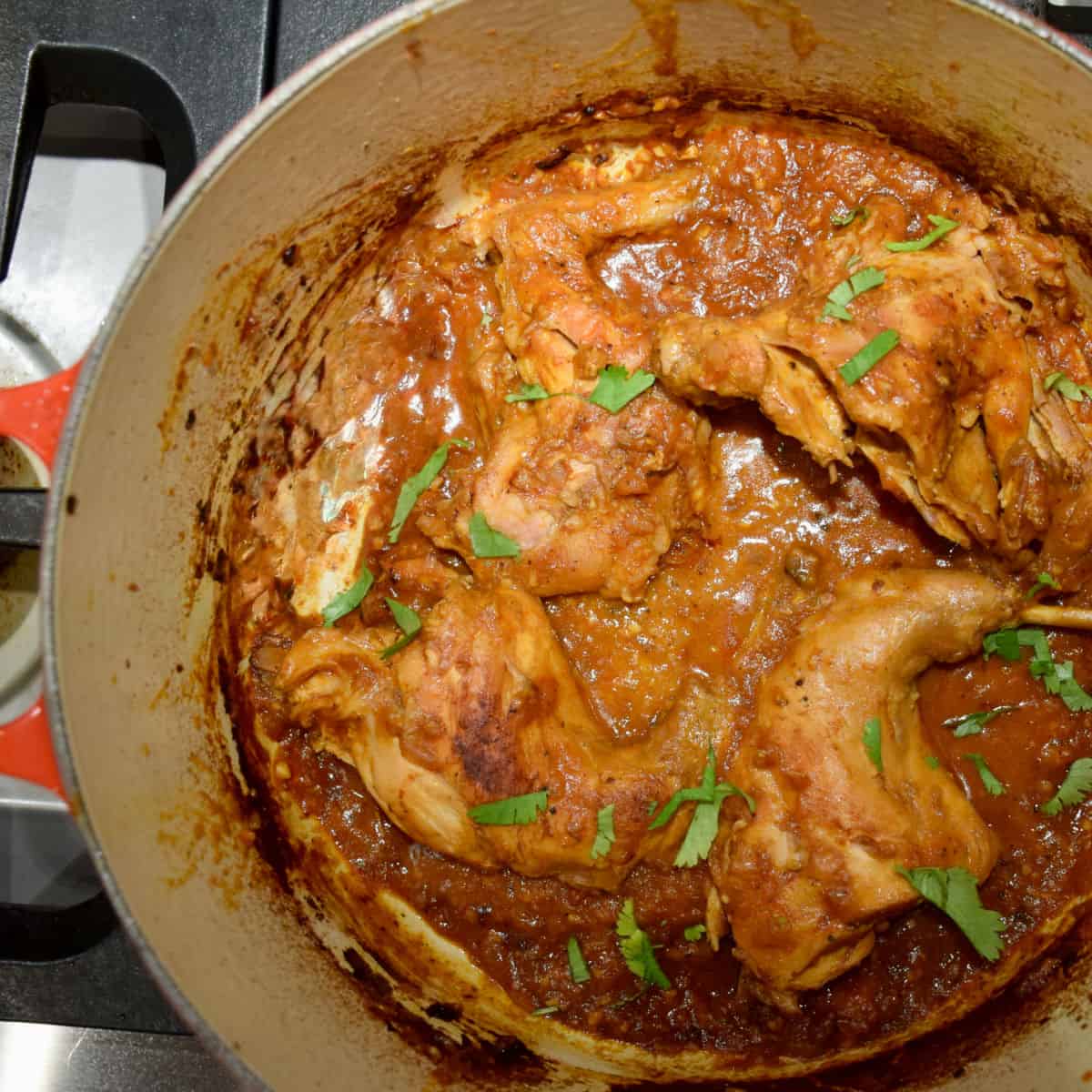
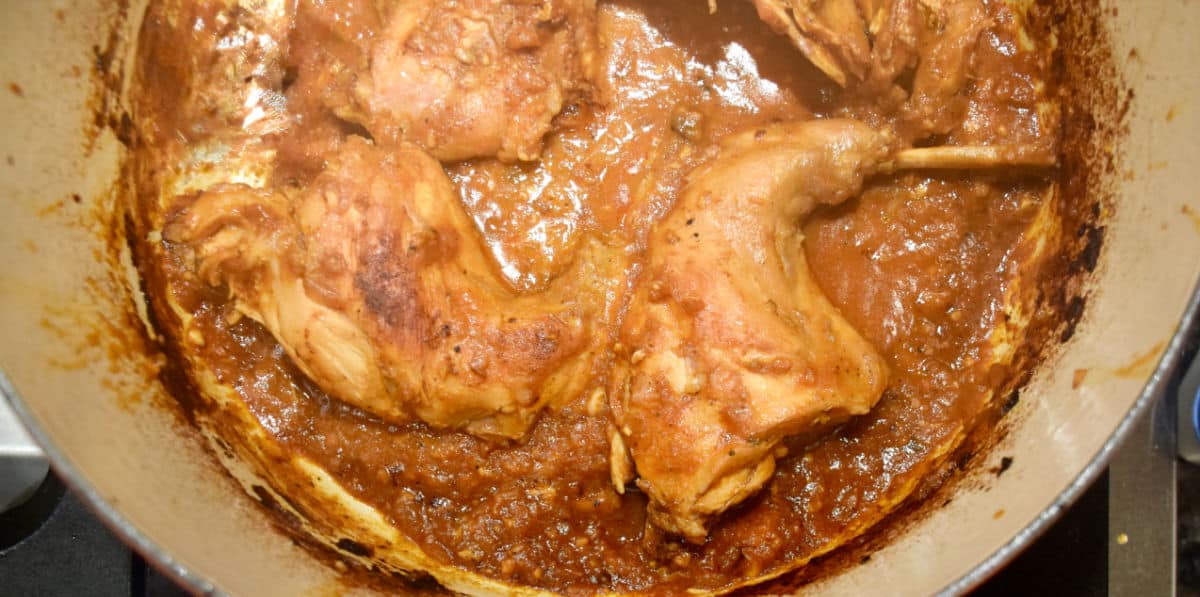
- Return the browned rabbit pieces to the Dutch oven and turn them to coat with the sauce. Cover and bake at 350°F for 1 hour. Carefully check a leg quarter and a rolled side piece for tenderness. If they need more time, set the pot over low heat on the stovetop and simmer gently, covered, until fork-tender, checking every 15 minutes. The sauce will reduce as it cooks, becoming a flavorful coating for the rabbit. Add a splash of broth if it gets thicker than you’d like.
Finish and adjust
- Stir in ¼ cup coconut milk. Taste the sauce; add more Thai red curry paste if you’d like more heat, or a little more coconut milk to soften it. Serve the rabbit coated with sauce, with rice and cilantro if desired.
Notes
Nutrition
Nutritional information is provided as an estimate only. Actual values may vary depending on ingredients, brands, and portion sizes.
Ingredients and Why They Matter
Rabbit: Domestic rabbit has a mild flavor that pairs well with the bold curry sauce or Bone-In Chicken thighs /leg combo: remove the skin before braising.
Curry powder, cumin, turmeric, and cayenne: These bring warm, earthy flavor and gentle heat to the Indian-style curry base. Use a mild or hot curry powder to suit your taste, and adjust the cayenne as you like.
Thai red curry paste: Adds chile heat and layers of aromatic flavor that make the sauce especially savory. Start with 1 tablespoon, then add more to taste.
Onion, ginger, and garlic: These form the sauce's fragrant foundation. Fresh ginger and garlic give the brightest flavor; in a pinch, use about 2 teaspoons ground ginger and 1 teaspoon garlic powder.
Tomato paste: Adds concentrated savory depth and helps give the sauce body. If you don’t have tomato paste, use ¼ cup tomato purée and simmer the sauce until it thickens.
Chicken broth: Provides the braising liquid and carries the spices through the meat. Homemade or low-sodium broth lets you better control the salt; vegetable broth can stand in.
Coconut milk: Softens the spice and rounds out the finished sauce. Use unsweetened canned coconut milk; light coconut milk works, though the sauce will be less rich.
How to Cut and Tie a Whole Rabbit
For this curry, use the whole rabbit. Cut it into four leg quarters, then separate the remaining body into two side pieces. Roll each side piece into a compact bundle and tie it securely with kitchen twine. The rolled pieces will cook more evenly alongside the larger leg quarters. Remove the twine before serving.
FAQs
No. A food processor makes quick work of finely chopping the onion, ginger, and garlic, but a sharp knife works just as well. Chop them as finely as you can so they soften into the sauce as it braises.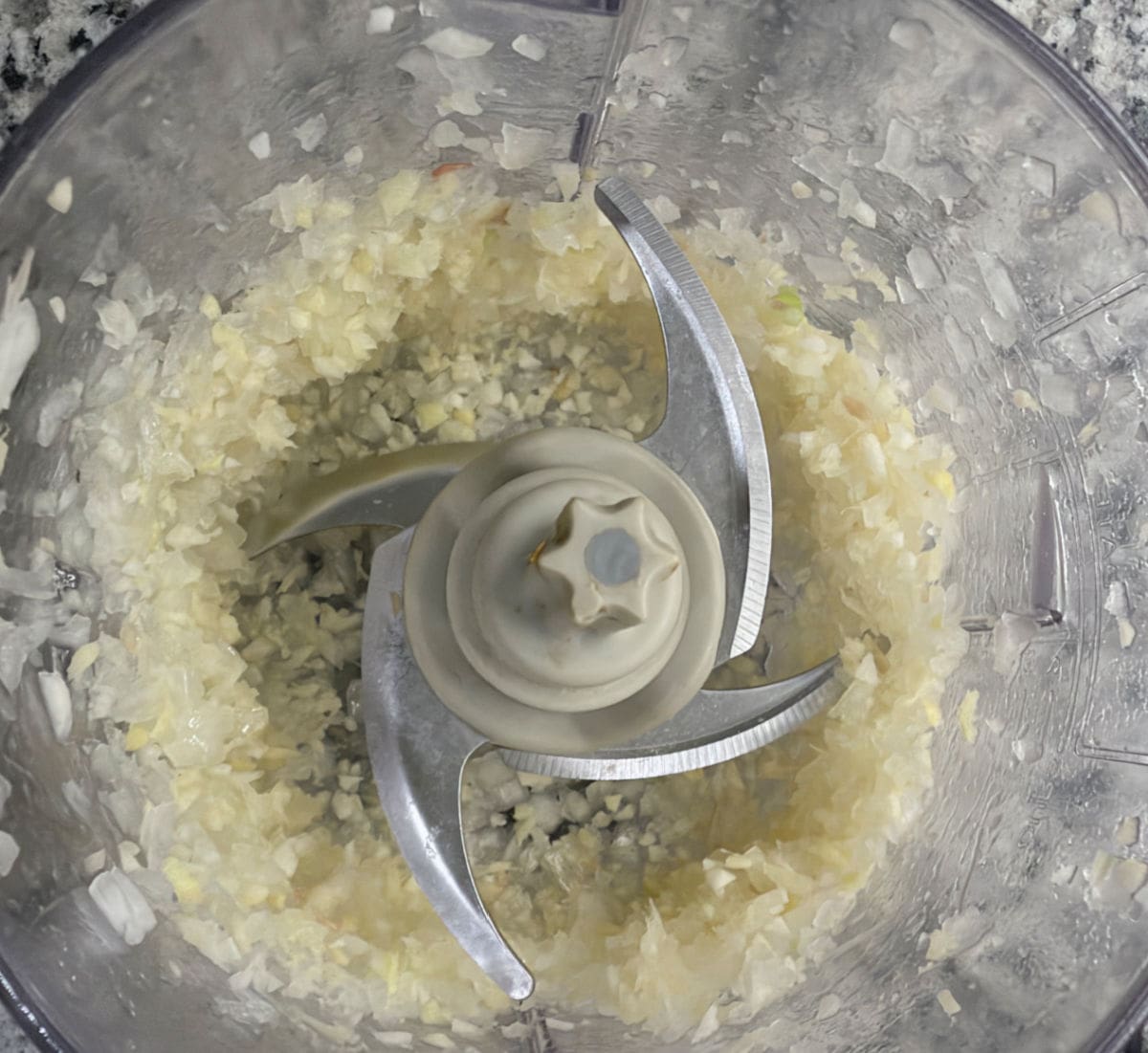
Full-fat coconut milk gives the sauce a silkier texture and helps round out the curry’s spices. Light coconut milk will work, but the sauce won’t be quite as rich. Use unsweetened coconut milk, not sweetened cream of coconut.
Yes. After returning the browned rabbit to the pot, cover and simmer gently over low heat until fork-tender, about 1½ hours. Keep the liquid at a quiet simmer, not a boil, and check occasionally to make sure the sauce isn’t sticking.
Yes. Brown the rabbit and prepare the curry sauce on the stovetop first, then transfer everything except the coconut milk to the slow cooker. Cover and cook on Low for about 5–6 hours, until tender. Stir in the coconut milk near the end, then taste and adjust the seasoning.
Let the curry cool, then refrigerate it in an airtight container for up to 3 days. Store the rabbit with its sauce to help keep the meat moist. Reheat gently on the stovetop, adding a splash of broth if the sauce has thickened.
Shred the leftover rabbit into its sauce and use it to make [Rabbit Curry Noodle Soup]. The curry sauce flavors the broth, while lemongrass, rice noodles, and snap peas make a fresh second meal.
Yes. Freeze the rabbit in its sauce in an airtight, freezer-safe container for up to 3 months. Thaw overnight in the refrigerator and reheat gently. The sauce may separate slightly; stir it as it warms.
Lamb, goat, or pork can work, though each will bring a different flavor and may need a different braising time. Choose bone-in stew cuts—such as lamb shoulder, goat shoulder, or pork shoulder—cut into serving-size pieces. Braise gently until fork-tender, checking as it cooks; the time will depend on the cut and size. Avoid lean, quick-cooking cuts, which can dry out during the long braise.
Wine, Beer, and Non-Alcoholic Beverage Suggestions
Wine: Off-dry Riesling
A slightly sweet Riesling cools the curry’s gentle heat, while its bright acidity lifts the rich, coconut-finished sauce. Look for a Kabinett or another off-dry style rather than a very sweet dessert Riesling.
Also good: Grenache
A light, fruit-forward Grenache brings red-berry flavor that complements the curry’s warm spices without overpowering the mild rabbit. Choose a softer, lower-tannin bottle; heavy oak or firm tannins can make the spices taste harsher.
Beer: Belgian-style witbier
Its citrusy, gently spiced character suits the ginger and curry, while a lively carbonation refreshes the palate between bites. A crisp lager is another easy choice if you want something more neutral.
Non-alcoholic: Ginger-lime spritz
Mix ginger beer or ginger syrup with sparkling water and fresh lime. The ginger echoes the aromatics, the lime adds a bright counterpoint to the coconut milk, and the bubbles refresh the palate. Adjust the ginger beer to keep it spicier than sweet.
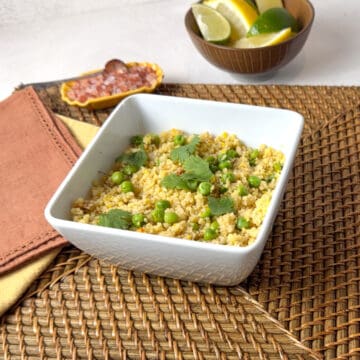
Side Dishes that Work with this Curry


This post was originally published in February 2016. I updated it with improved instructions, helpful cooking tips, and new information to make it even easier to prepare.
Thanks for Visiting, Please leave a comment on your experience.