
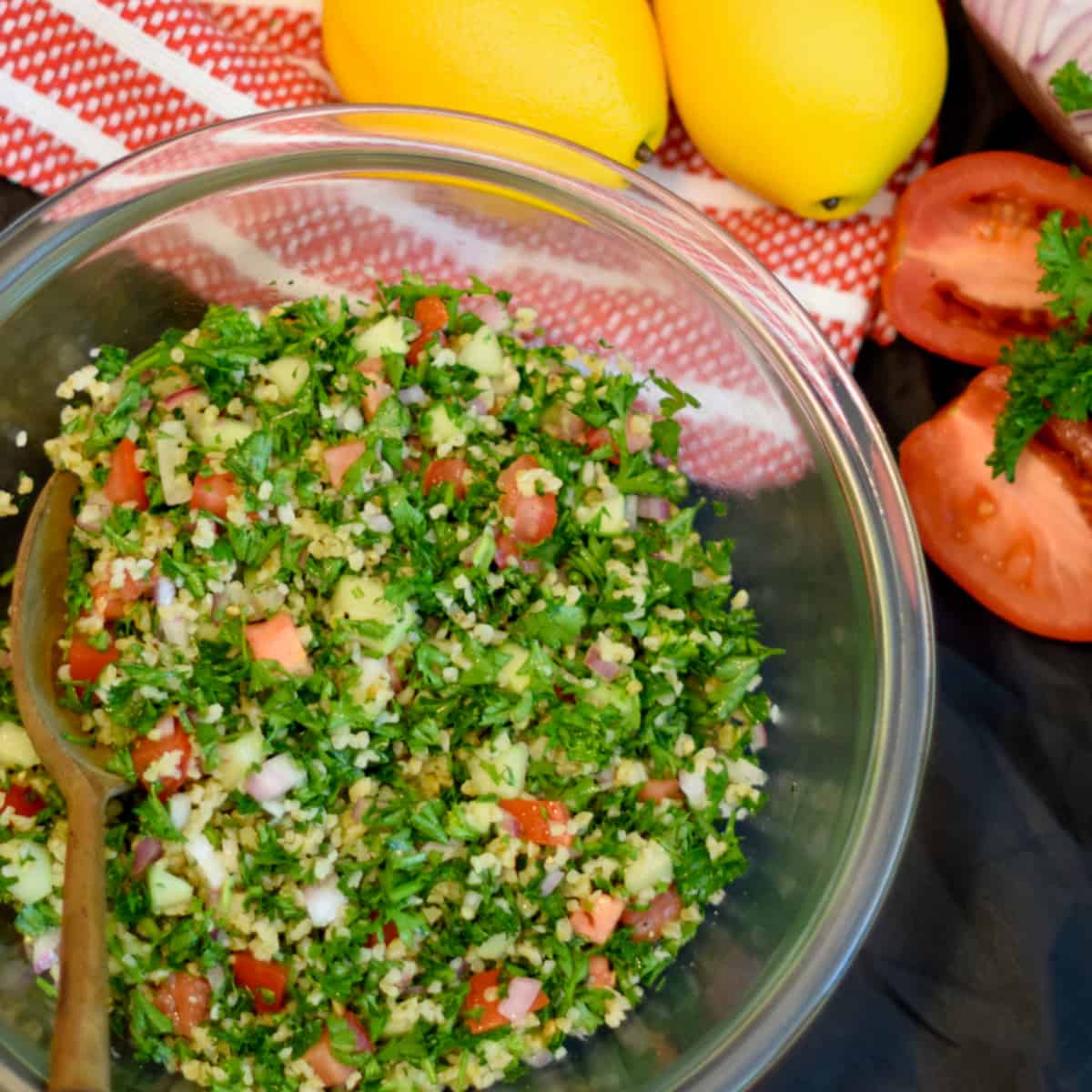
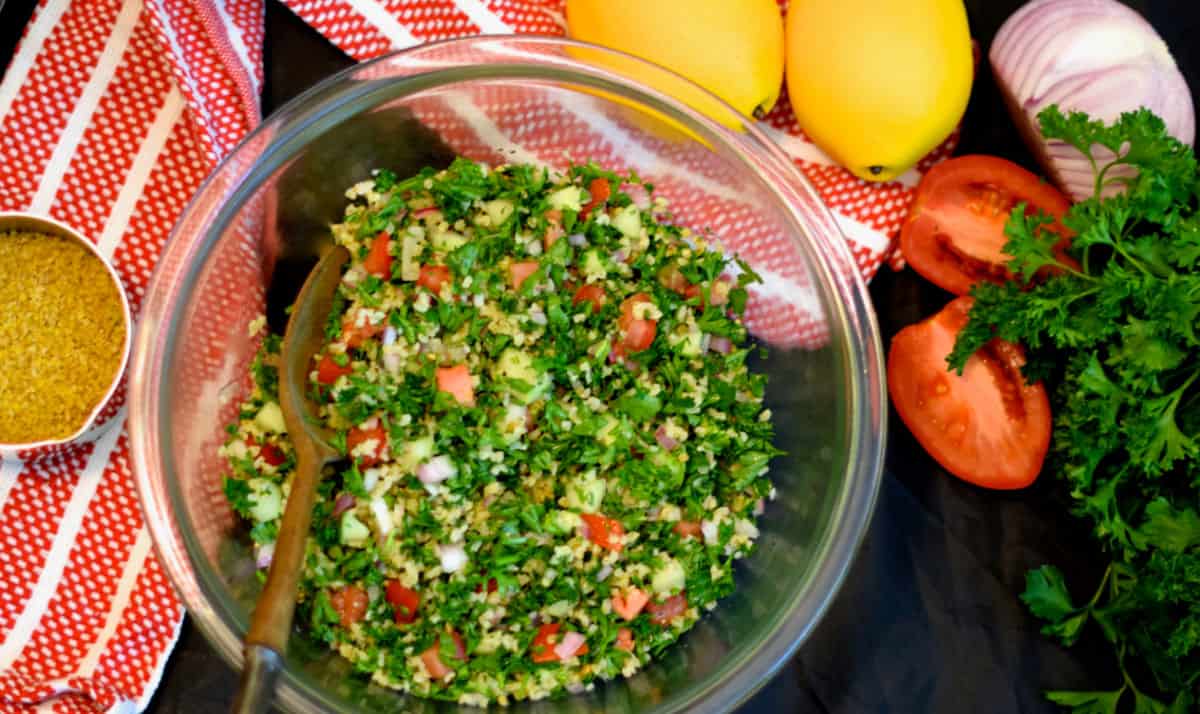
"This Tabbouleh Salad (also spelled Tabouleh or Tabouli) is a light, refreshing salad of bulgur wheat, fresh tomato, cucumber, onion, and lots and lots of parsley. It could almost be called a parsley salad since so much is used. Simply tossed with a dressing of fresh lemon juice and extra virgin olive oil, it makes a great healthy simple side"
Why I Finally Started Making My Own Tabbouleh
After years of buying tabbouleh from deli counters - sometimes getting lucky with a perfectly balanced mix of bulgur, parsley, and fresh vegetables, but more often ending up with disappointing containers of oily parsley with barely any bulgur - I decided to make my own.
My goal was simple: create the perfect ratio of nutty bulgur wheat to fresh parsley to crisp cucumber to ripe, firm tomatoes. And most importantly, I wanted a bright, lemony dressing that enhanced rather than overwhelmed the ingredients.
The result? A tabbouleh that's easy to make, absolutely delicious, and incredibly good for you.
I think I nailed it.
Jump to:
- Why I Finally Started Making My Own Tabbouleh
- Tabouleh (Tabbouleh) Salad
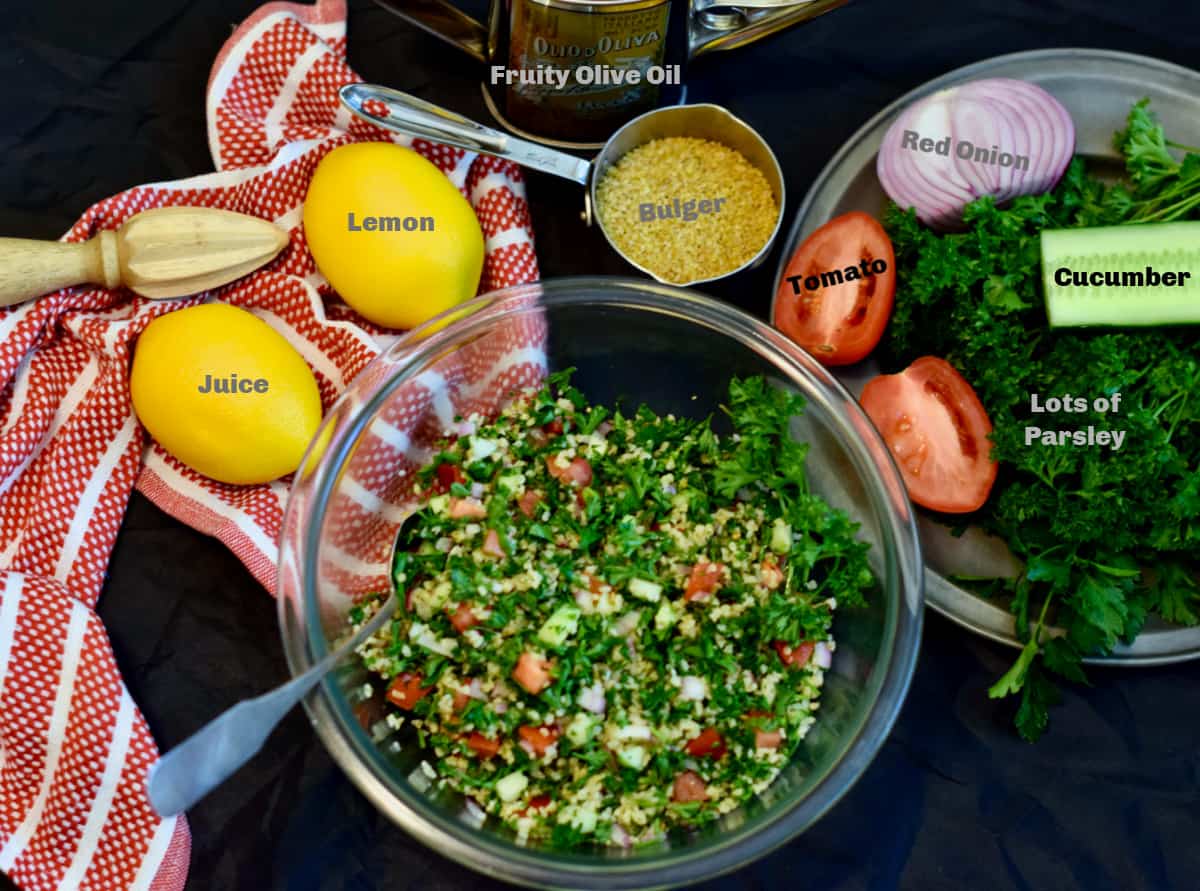
- Tabbouleh (Tabouli) Salad Ingredients
- What is Cracked Bulgur Wheat and How to Cook It (Learn from My Mistakes)
- Health Benefits of Parsley: More Than Just a Pretty Garnish
- What Kind of Cucumber to Use in Tabbouleh Salad
- The Best Tomato to Use
- A Perfectly Simple Dressing to Finish the Salad
- FAQ
- Want more hearty salads?
More detailed instructions and information about Tabouleh Salad follow the recipe
Tabouleh (Tabbouleh) Salad
Ingredients
- ¼ cup fresh lemon juice about 1 large lemon
- ¼ cup best quality extra virgin olive oil here is a place to use a full-flavored oil
- Salt and coarse ground pepper to taste (about 1 teaspoon salt and ½ teaspoon pepper is my taste)
- ½ cup about ¼ large red onion, diced
- ¾ cup diced cucumber seeds removed, skin if desired
- ½ to ¾ cup diced tomato Roma works well here
- ¼ cup cracked bulgur wheat cooked, drained and cooled
- 2 cups or more minced fresh parsley leaves 1 - 2 bunches depending on size
Instructions
- Whisk the lemon juice, olive oil, salt, and pepper together in a large bowl. Add the onions, cucumber, and tomato. Stir in the cooked bulger, then add the parsley. There should be a copious amount of parsley. Mix well, Taste and adjust for salt and pepper, adding more lemon juice if it tastes too oily. Best if allowed to rest in the refrigerator for a couple of hours to allow the flavors to meld. Remove from refrigerator about ½ hour prior to serving.
Nutrition
Tabbouleh (Tabouli) Salad Ingredients
What is Cracked Bulgur Wheat and How to Cook It (Learn from My Mistakes)
The Basics: Cracked bulgur wheat is simply wheat that's been partially cooked, dried, and then cracked into small pieces roughly the size of Grape-Nuts cereal. It has a pleasant, nutty flavor and normally cooks in just 10-15 minutes. Despite its "exotic" reputation, there's absolutely nothing intimidating about working with it.
The Tempting Shortcut (Don't Fall for It): While researching recipes, I found several that recommended skipping the cooking step entirely - just soak raw bulgur directly in the dressing. The theory seemed sound: since bulgur is already partially cooked, the acidic dressing should soften it while adding extra flavor.
Why This Doesn't Work: My "soaked" bulgur remained stubbornly hard, crunchy, and unpleasantly oily. No amount of time or dressing could transform those little wheat pellets into anything edible. Straight into the trash.
The Right Way: Cook bulgur according to package directions, but stop about 1 minute short. This leaves the grains soft yet firm enough to absorb the dressing without becoming mushy. After mixing with the dressing and letting it sit for 2 hours, you'll have perfectly tender, flavorful bulgur that makes tabbouleh worth eating.
Bottom Line: Sometimes the traditional method exists for a reason. Cook your bulgur - your tabbouleh will thank you.
Health Benefits of Parsley: More Than Just a Pretty Garnish
Remember when every restaurant plate came with a sprig of parsley perched on an orange slice? That bright green garnish was supposed to add a "pop of color," but most people just pushed it aside.
I was probably the only person who actually ate mine. Beyond being a fantastic palate cleanser, I discovered that parsley packs some serious nutritional punch.
Why Parsley Deserves a Starring Role:
- Vitamin powerhouse - Rich in vitamins C, B12, K, and A to keep your immune system firing on all cylinders
- Natural diuretic - Helps flush excess fluid from your body and supports kidney function (Note: Contains oxalates, so check with your doctor if you have kidney or gallbladder issues)
- Blood pressure support - The folic acid in parsley may help keep your numbers in check
- Anti-inflammatory properties - Regular consumption can help ease joint pain
- Digestive aid - Relaxes stiff muscles and encourages healthy digestion
- Cancer-fighting potential - Studies suggest parsley may help inhibit tumor growth
The Tabbouleh Connection: This is why traditional tabbouleh recipes call for generous amounts of parsley - we're talking at least two cups of chopped fresh herbs, not just a token sprinkle. You're not just adding flavor; you're creating a genuine health food.
Flat-leaf or curly? Your choice - both work beautifully and deliver the same nutritional benefits. So go ahead, make parsley the star of your tabbouleh instead of relegating it to garnish duty.
What Kind of Cucumber to Use in Tabbouleh Salad
The Short Answer: Any cucumber you can get your hands on will work beautifully.
Your Options:
- Persian cucumbers - Small with tender, edible skin (no peeling required)
- Japanese or Hot House cucumbers - Crisp with thin skin that's usually fine to leave on
- Regular cucumbers - The grocery store standard that works just fine
Damn, this salad is delicious and healthy!
To Peel or Not to Peel: While Persian cucumbers never need peeling, and I often leave the skin on Hot House varieties for extra crunch, I chose to peel mine for this tabbouleh. The skin's color and texture felt like a distraction from the clean, bright flavors I was after. But honestly? Go with your preference.
Health Bonus: Cucumbers bring their own nutritional benefits to the party - they help lower uric acid (great for kidney health), support blood sugar management for diabetics, and may help reduce cholesterol levels. Some benefits even overlap with parsley's impressive resume.
The Non-Negotiable Step: Regardless of which cucumber you choose or whether you peel it, always use a teaspoon to scoop out and remove the seeds. This prevents your beautiful tabbouleh from becoming a watery mess.
Bottom Line: Pick whatever cucumber looks freshest at your store. Your tabbouleh will be great either way.
The Best Tomato to Use
The Golden Rule: Fresh is everything.
Off-Season Choice: When you're making tabbouleh outside of peak summer months, reach for Roma tomatoes. They consistently deliver the best flavor and texture when other varieties are disappointing hothouse imports.
Summer Options: During tomato season, you're in luck - any fresh, firm tomato will work beautifully. Whether it's a perfect beefsteak, garden-fresh heirloom, or classic slicing tomato, let ripeness and firmness be your guide.
The Seed Situation: If your chosen tomatoes are particularly seedy, take a moment to remove the seeds before dicing. Too many seeds can turn your crisp, fresh tabbouleh into a soggy mess - not the texture you're after.
Bottom Line: Great tomatoes make great tabbouleh. Choose the freshest, firmest option available in your season, and don't be afraid to de-seed if needed.
A Perfectly Simple Dressing to Finish the Salad
The Formula: Equal parts lemon juice and extra virgin olive oil. That's it.
The Sweet Spot: I found that ¼ cup of each creates the perfect balance - enough to coat and flavor everything without drowning the fresh ingredients.
Olive Oil Matters Here: This is your moment to splurge on a full-flavored extra virgin olive oil. Look for one with a bit of "pepper" or "grass" to its personality - those flavor notes will elevate your tabbouleh from good to memorable.
Where to Shop: Higher-end markets typically carry artisanal olive oils that are worth the extra cost. Remember, you're not using this for cooking - just for finishing - so a bottle will last quite a while.
Storage Tip: If you don't use premium olive oil frequently, store it in the refrigerator to maintain freshness. It will solidify in the cold, so let it sit at room temperature for a few minutes to "thaw" before using.
The Result: This simple 1:1 ratio creates a bright, clean dressing that enhances rather than masks the fresh flavors of your carefully prepared ingredients.
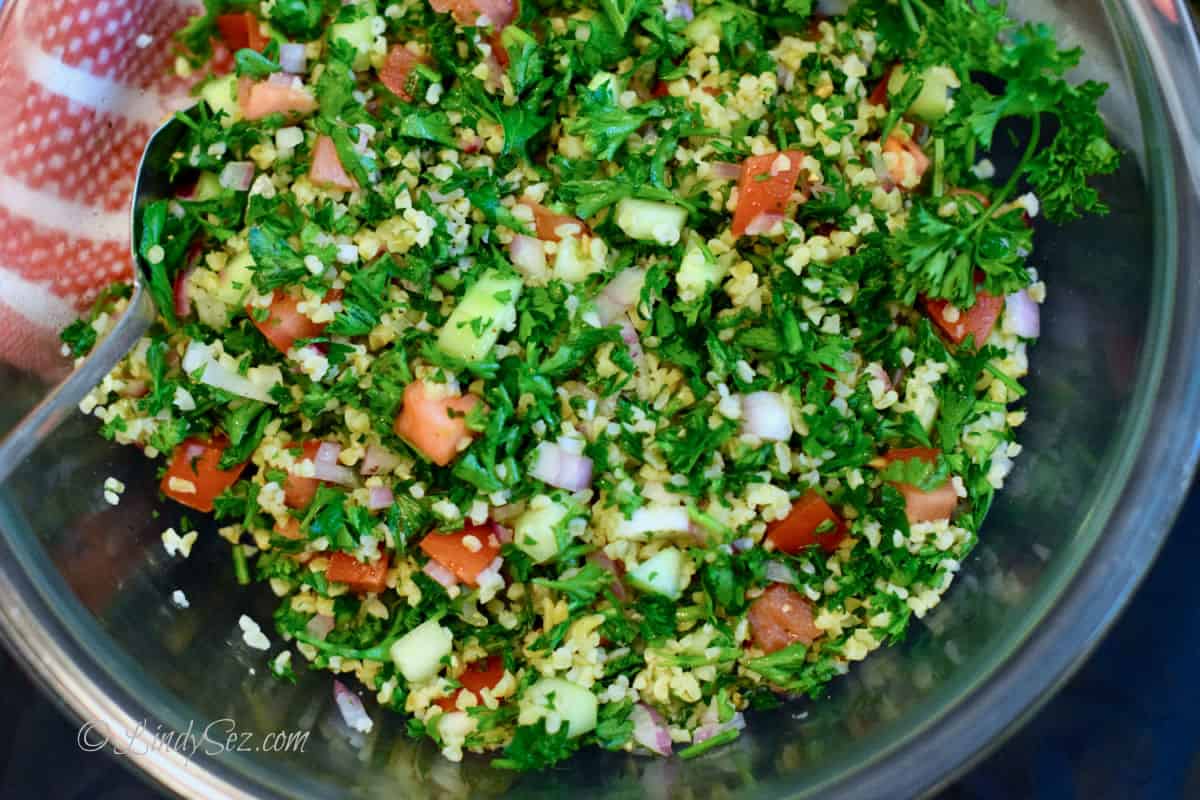
So there you have it. Easy peasy Tabbouleh Salad. A perfect side for grilled steak, lamb chops, pork chops, chicken, fish, you name it.
FAQ
You could make this salad gluten-free by substituting Quinoa for the Cracked Bulgur Wheat.
Yes. Not only is it mostly heart-healthy vegetables, but the Houston Weight Loss Surgery Center also endorses Tabouli as one of the healthiest salads to have before weight loss surgery to improve cardiovascular function, cleanse the body, lose weight, replenish essential vitamins and promote healing after laparoscopic bariatric surgery.
This salad holds in the refrigerator for a few days and actually improves in flavor on days 2 and 3. After that, the tomatoes tend to get a bit mushy, so I wouldn't keep it much longer...that is if it's still around.
BB says
The cool beans deal with this salad is that when you have Tabouleh salad it should have a bit of a "bite", which is the parsley. In other words, Tabouleh salad that doesn't have a nice peppery under note is missing it's proper ration of parsley.
Great job!