
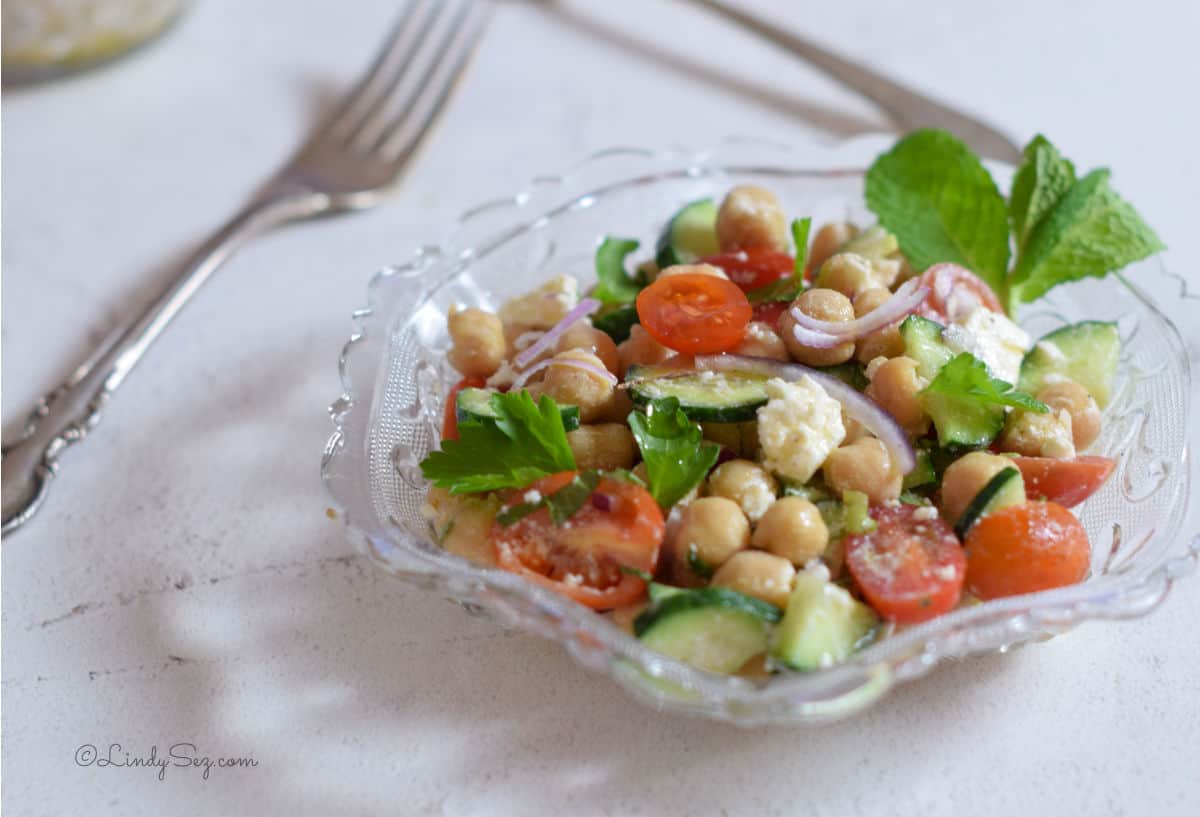
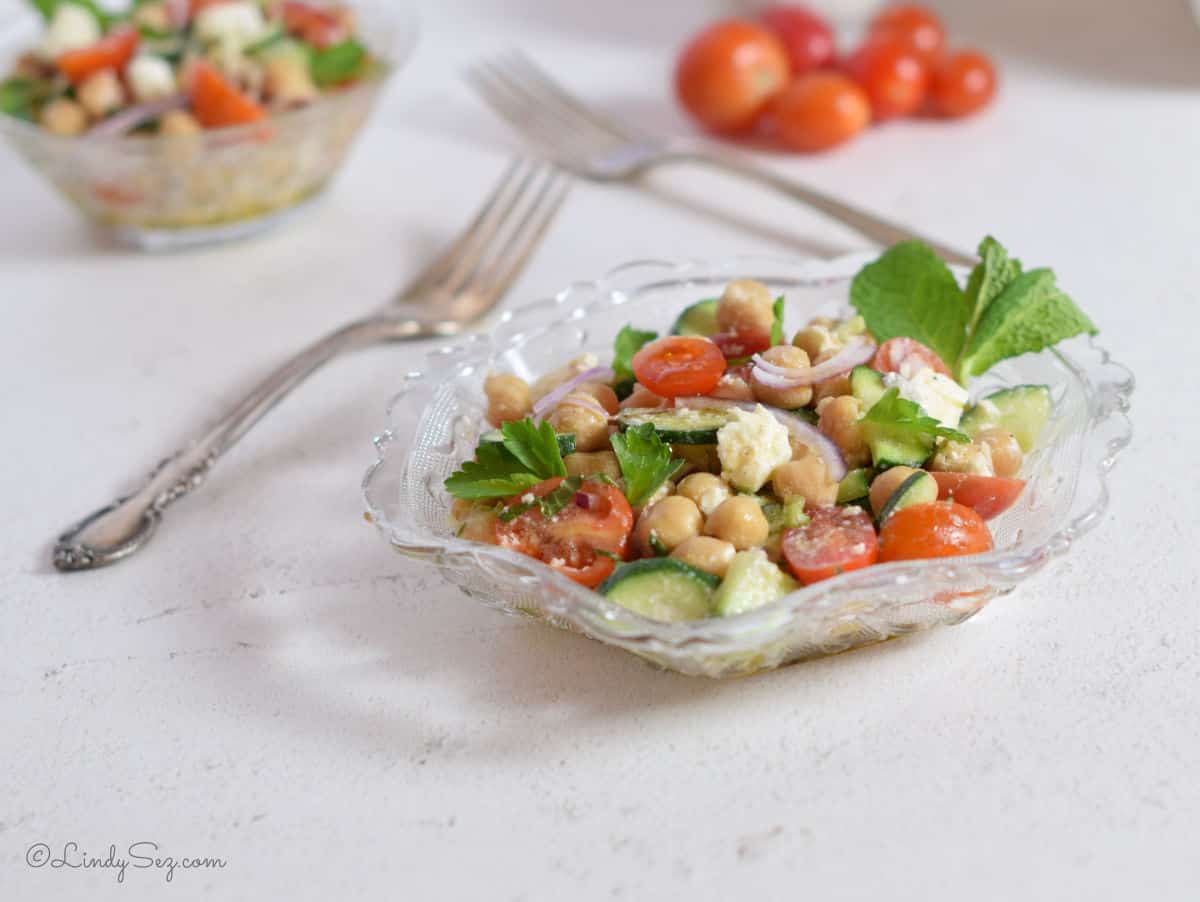
This recipe for Mediterranean Chickpea Salad with Feta combines fiber-rich chickpeas (also known as garbanzo beans) with fresh vegetables and creamy, salty feta cheese. Eat it as a side dish, or serve it over lettuce and call it lunch.
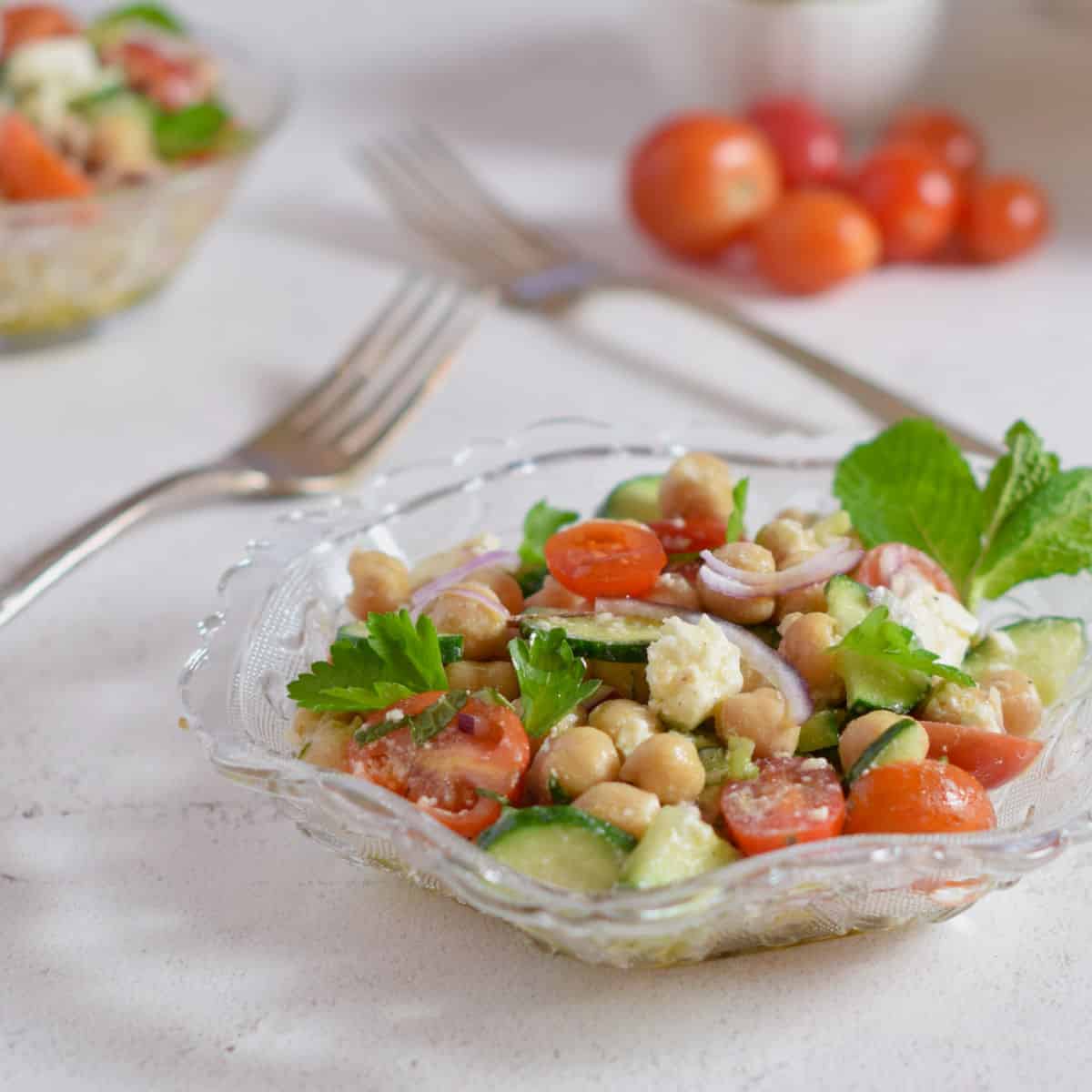
WHY YOU SHOULD MAKE THIS RECIPE: Mediterranean Chickpea Salad with Feta
Summer is calling - and with it comes the promise of more outdoor time, backyard grilling, and lazy picnics that stretch into evening.
The Perfect Side Dish Challenge: You need something that can be made in the cool morning hours and served alongside your favorite summer fare - whether that's Grilled Rack of Lamb with Spinach Artichoke Pesto, a Grilled Chicken Sandwich with Sundried Tomato Tapenade, or just a perfectly simple hamburger.
Beyond the Usual Suspects: While classics like Pasta Salad with Sun-Dried Tomatoes or Lindy's Family Potato Salad always deliver, sometimes you want something fresh and new. Something that checks all the boxes: interesting, tasty, easy, healthy, and sturdy enough to sit out in the summer air without worry.
Enter Mediterranean Chickpea Salad with Feta - a dish that hits every single mark on that wish list.
Why It Works: Packed with fiber-rich garbanzo beans, crisp fresh vegetables, and brightened with a zesty dressing, this salad is the ideal companion to summer grilling. But here's the bonus - it's equally wonderful the rest of the year when you're craving those bright Mediterranean flavors.
The Bottom Line: This is the versatile, crowd-pleasing side dish your summer menu has been waiting for.
Look for more detailed information below the recipe card
Mediterranean Chickpea Salad with Feta - Recipe Card
Ingredients
- 1 (15 ½-ounce) can garbanzo beans drained and rinsed or 2 cups fresh cooked chickpeas (garbanzo)
- 1 cup diced cucumber seeded, (if using hothouse English or Persian cucumber, no need to peel or seed)
- 1- pint cherry tomatoes or grape tomatoes halved - about 1 cup
- ¼ cup diced or thinly sliced red onion
- 3 tablespoons minced fresh parsley - or to taste
- 1 tablespoon minced fresh mint
- ⅓ cup good quality extra virgin olive oil
- ⅛ cup fresh lemon juice or red wine vinegar
- ½ to 1 cup crumbled feta cheese to taste
- Salt and freshly ground pepper to taste
Instructions
- Combine the chickpeas, cucumber, tomatoes, red onion, parsley, mint, and any other optional herbs in a large bowl. In a small bowl whisk together the olive oil and lemon juice or vinegar, season with salt and pepper. Pour enough dressing on the salad to coat well. (You may not need all the dressing.) Gently stir in the crumbled feta. Taste and adjust seasonings. Chill for at least 1 hour; stir and serve.
Notes
Nutrition
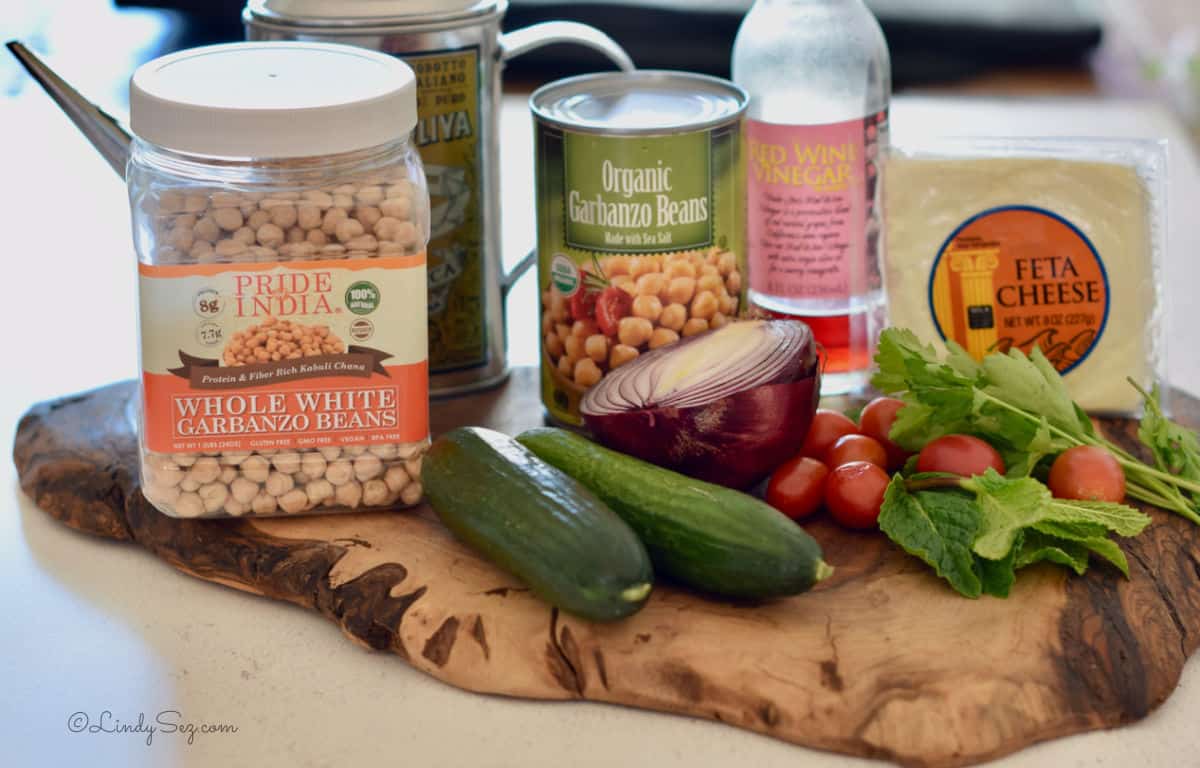
INGREDIENTS, VARIATIONS, AND SUBSTITUTIONS
What you need to make this easy Mediterranean Chickpea Salad with Feta
Chickpeas (also known as Garbanzo Beans) - Canned or freshly cooked both work beautifully. While I'll share how to cook them fresh later in this post, canned is incredibly convenient. Look for BPA-free cans - most brands have switched away from BPA linings that were linked to health concerns like breast cancer. Not a chickpea fan? Cannellini beansmake an excellent substitute.
Cucumber - Your choice matters here. Standard slicing cucumbers should be peeled and seeded to avoid any bitter or unpleasant textures. I used Persian cucumbers - smaller, thinner-skinned, and slightly sweeter, so no peeling required. English hothouse cucumbers can also be left unpeeled, though I still prefer them seeded.
Cherry Tomatoes - Or grape tomatoes work best for this dish, though you could dice a large tomato if that's what you have.
Red Onion - While sweet onions like Vidalia, Walla Walla, or Maui would work, I prefer red onion for both its striking color and sharper bite that balances the creamy feta.
Feta Cheese - This Greek brined cheese made from sheep's milk (or sheep and goat's milk blend) brings essential tangy, salty flavor ranging from mild to sharp. I always buy feta in blocks rather than pre-crumbled for better texture and freshness. There's really no proper substitute - if you don't like feta, simply omit it.
Fresh Herbs - Parsley and mint are my go-to combination, but feel free to add fresh dill, minced oregano, or marjoram for extra complexity.
Extra Virgin Olive Oil - Preferably Greek olive oil, which tends to be green with strong, robust flavor and aroma. Any high-quality Italian or Spanish olive oil will work beautifully too.
Fresh Lemon Juice or Red Wine Vinegar - I lean toward lemon juice, but red wine vinegar is equally delicious. Avoid strong balsamics or apple cider vinegar - their distinct flavors would overpower the Mediterranean profile.
Salt and Freshly Ground Pepper - Of course.
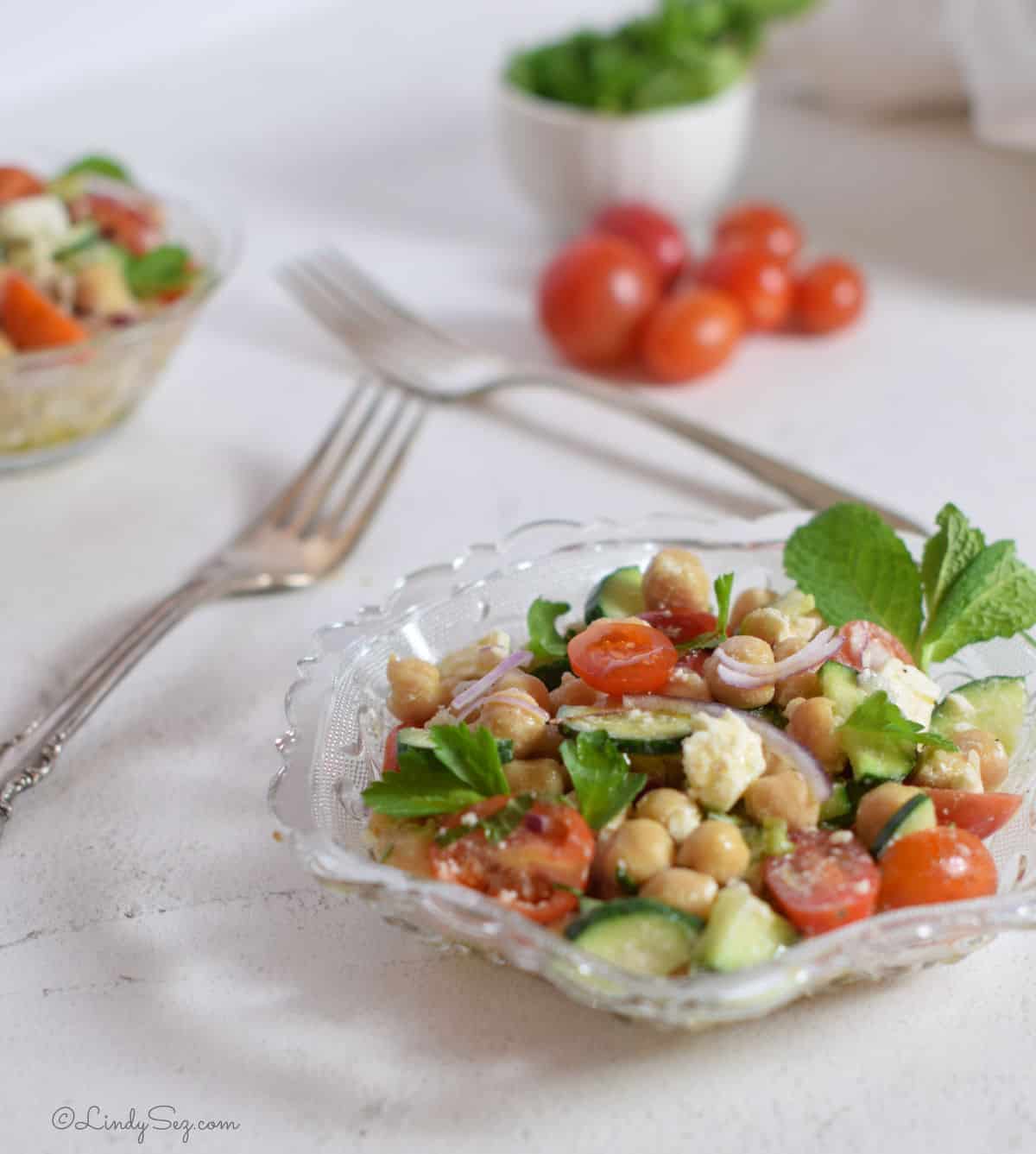
Step-by-Step: How to Put This Salad Together
The beauty of this recipe? It's ridiculously simple.
- Prep your chickpeas - Cook and chill fresh chickpeas, or simply open a can, drain, and dump into a large bowl.
- Handle the cucumber - Decide whether you need to peel and seed based on your cucumber type. Then dice into medium pieces and add to the bowl.
- Prep the tomatoes - Cut cherry or grape tomatoes in half and toss in. If using a large tomato, cut in half and gently squeeze to remove excess seeds and juice (this prevents your dressing from getting watery). Then dice and add.
- Add the herbs - Mince your chosen fresh herbs and sprinkle into the bowl.
- Season the base - Give everything a generous sprinkle of salt and freshly ground pepper, then stir to combine.
- Make the dressing - In a separate small bowl, whisk together lemon juice (or red wine vinegar) with olive oil until well emulsified. Pour over the salad and gently mix.
- Fold in the feta - Add crumbled feta and mix gently until just incorporated. Key tip: Don't overmix or you'll turn your beautiful feta chunks into cottage cheese mush.
- Let it marinate - Cover with plastic wrap and refrigerate for at least 1 hour. You can marinate overnight if desired. Before serving, remove from the fridge and let come to room temperature for about 1 hour.
That's it - fresh, flavorful, and absolutely foolproof.
HOW TO STORE LEFTOVERS
Store any leftover salad covered in the refrigerator for 3-4 days maximum. While the salad won't be spoiled beyond that timeframe, you'll start to notice signs of age - the tomatoes will begin to break down and release more liquid, and the fresh herbs will lose their vibrant color and flavor.
Push it much longer and the overall taste will definitely suffer.
Pro tip: This salad actually improves after the first day as the flavors meld together, so don't hesitate to make it ahead for better flavor development.
FAQ's
The short answer: Absolutely nothing - except geography and cuisine.
Chickpea comes from the Latin word cicer, referring to the plant family of legumes called Fabaceae. Garbanzo is the popular Spanish-derived name for the exact same bean. Whether you call them chickpeas or garbanzo beans depends entirely on where you are or what type of cuisine you're making.
Here's a fun fact: While we've gotten into the habit of calling any legume-based dip "hummus," the actual Arabic translation for chickpea is hummus. This means that technically, any puree made from black beans, white beans, or other legumes isn't really hummus at all - it's simply a vegetable puree.
True hummus can only be made from chickpeas.
So whether you're shopping for chickpeas for your Mediterranean salad or garbanzo beans for your Spanish-inspired dish, you're getting the exact same nutritious, versatile legume. The name just depends on which culinary tradition you're following.
Nutritional Powerhouse: Chickpeas deliver impressive nutrition in a small package - low in both fat and calories while being packed with protein and fiber.
Plant-Based Protein Champion: They're an excellent protein source for anyone following a vegetarian or vegan diet, helping you meet your daily protein needs without relying on animal products.
Heart-Healthy Choice: Regular consumption of chickpeas has been linked to decreased risk of heart disease, thanks to their fiber content and beneficial nutrients.
Digestive Support: The high fiber content promotes healthy digestion and helps maintain stable blood sugar levels.
Vitamin and Mineral Rich: Chickpeas provide essential vitamins and minerals including folate, iron, phosphorus, and manganese - nutrients that support everything from energy production to bone health.
The Bottom Line: Whether you're looking to boost your protein intake, support heart health, or simply add more nutritious foods to your diet, chickpeas are a versatile, affordable superfood that delivers on multiple fronts.
Step 1: Soak - Rinse the dried chickpeas and transfer to a large pot. Add enough water to completely submerge the beans. Cover and let soak for at least 3 hours, though overnight is even better. Do this on your countertop - no need to refrigerate.
Step 2: Drain and Rinse - Toss the soaking water and give the chickpeas a fresh rinse.
Step 3: Cook - Add 3 cups of fresh water for every 1 cup of dried chickpeas. Bring to a boil, then reduce heat and simmer for 30-60 minutes, or until the beans reach your preferred tenderness.
For This Salad: You want them slightly firm so they hold their shape and don't turn mushy when mixed with the other ingredients. Don't overcook them.
Step 4: Finish - Drain any excess water and let the chickpeas chill completely before proceeding with the salad recipe.
Time-Saving Tip: Cook a large batch and freeze portions for future use. Cooked chickpeas freeze beautifully and thaw quickly for salads, soups, or snacking.
Proceed with caution. Chickpeas are part of the legume family, which means they're related to kidney beans, lima beans, black beans, and peanuts.
Why This Matters: Peanuts aren't nuts at all; they're legumes that grow underground. This family relationship means that people with peanut allergies may also react to other legumes, including chickpeas.
The Bottom Line: If you have a peanut or tree nut allergy, it's best to consult with your allergist before adding chickpeas to your diet. While not everyone with a peanut allergy will react to chickpeas, the cross-reactivity risk is real enough that medical guidance is the smart approach.
Better Safe Than Sorry: Your health is worth more than any salad, no matter how delicious. Get professional advice before experimenting with legumes if you have known allergies.
Brian says
The chick peas make this
Serve with a buttery chard