
A rotisserie is one of the best ways to cook lamb. As this Garlic Herb-Stuffed Rotisserie Leg of Lamb slowly turns, the meat bastes itself, staying tender, juicy, and full of flavor. If you don’t have a rotisserie, you can easily make it in the oven. It’s all good!
If you’ve ever wondered how to cook a rotisserie leg of lamb, this recipe shows you exactly how to do it. A butterflied garlic herb-stuffed leg of lamb cooks beautifully on the rotisserie because the constant turning keeps the meat naturally basted while it roasts, creating tender slices with a flavorful herb crust.
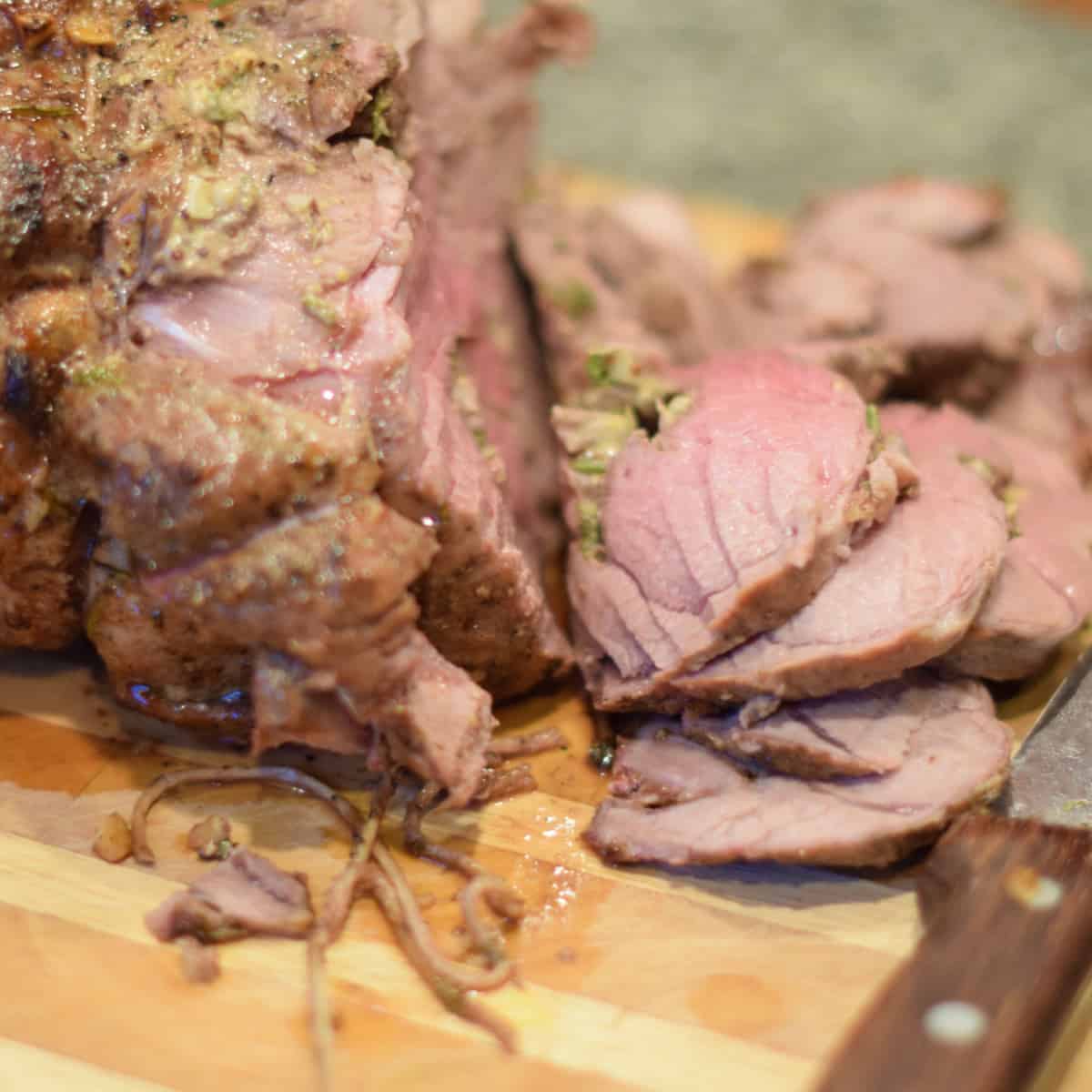
How to Make Herb-Stuffed Rotisserie Leg of Lamb
Tender roasted lamb with a deep, savory crust and a robust herb-filled stuffing is exactly what you get with this recipe for Garlic Herb-Stuffed Rotisserie Leg of Lamb.
Well, how about a mostly hands-off cooking method? The rotisserie does all the work, constantly turning and basting the meat so it stays juicy and flavorful. And the bonus is the leftovers. Thin slices of lamb make an easy weeknight meal tucked into gyros with tzatziki sauce, or in my case, with the yogurt sauce I use for my Greek Meatballs with Yogurt Dipping Sauce.
I love recipes that do double duty, don’t you? Especially when the second meal tastes completely different from the first.
I happened to have a leg of lamb in the freezer, and since it’s springtime, it felt like the right moment to cook it. Usually when I buy a leg of lamb, I cut it into pieces and make a slow-braised lamb in red wine, better known as Lamb Provençal. It’s incredibly freezer-friendly and a leg of lamb is generally more than my family needs for one meal, so having a second dish ready for another night is always a bonus.
But this particular day was sunny with bright blue skies, the kind of day that practically insists you fire up the grill. That made the rotisserie an easy choice. One of the best things about cooking this way is the constant turning, which keeps the juices moving and naturally bastes the meat as it cooks.
In other words, the rotisserie makes this leg of lamb almost hands free.
And when I can cook tender, juicy meat with very little fuss, I’m all in.
As for the flavorings, garlic was an easy decision. Lamb and garlic are a natural pair. Fresh rosemary was ready in the garden, along with marjoram, oregano, and thyme, so the herbs practically chose themselves.
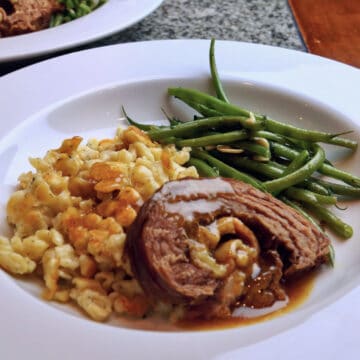
Then I started thinking about mustard. I use it in my recipe for my German-Stuffed Flank steak AKA Rouladen, where it adds both flavor and a little tenderizing power. It seemed like the perfect addition here, so I spread a generous layer over the lamb before rolling it up.
As it turns out, that decision paid off in a big way. The mustard adds depth of flavor and helps keep the meat wonderfully tender.
Jump to:
Cooking with the rotisserie is pretty much totally "hands-free"
And when I can cook delectably tender juicy meats, with no fuss and no muss, I'm there.
So what to flavor the lamb with?
Garlic is a no-brainer. I love garlicky lamb.
Rosemary, yep. Got fresh in the garden along with marjoram, oregano, and thyme, so the herbs are covered. Then I got to thinking about how mustard works as such a great tenderizer in my recipe for Rouladen and thought that would bring a lot of flavor to the party, so I spread some of that on too.
I was totally right, about both the tenderizing and added flavor.
More detailed instructions for Garlic Herb-Stuffed Rotisserie Leg of Lamb follow the recipe card.
Garlic Herb-Stuffed Rotisserie Leg of Lamb
Equipment
- Drip pan
Ingredients
- 1 3 ½ to 4 pound boneless leg of lamb
- Stuffing
- Salt and freshly ground pepper
- 6 cloves garlic finely minced or pressed
- ¼ cup whole grain mustard
- ¼ cup Dijon mustard
- 2 tablespoons finely minced fresh rosemary
- 2 tablespoons minced fresh marjoram or oregano or combo of both
- 1 tablespoon minced thyme
- Rub
- ¼ cup extra virgin olive oil
- 1 teaspoon minced fresh garlic
- 1 tablespoon garlic salt
- 1 teaspoon Kosher Salt
- Fresh coarse ground black pepper
Instructions
- Remove the netting from the leg of lamb. Open it up and using a sharp knife, cut the thicker parts of the lamb to create flaps, opening them to form a flatter, more even piece of meat. It does not need to be perfectly even, but aim for similar thickness throughout. If needed, lightly pound with a heavy meat mallet (not the tenderizer side).Season well with salt and freshly ground pepper, then using a knife or a garlic, press spread the garlic evenly over the meat. Mix the mustards together. Spread evenly over the inside of the meat. Sprinkle the rosemary evenly over, then add the marjoram/oregano and thyme. Roll up tightly and tie with the butcher's string at 1-inch intervals. If time allows, cover the roast with plastic wrap and place in the refrigerator a few hour or even overnight to allow the flavors to blend.
- Stick the spit through the center of the meat and secure both ends of the rotisserie. Rub the meat with olive oil and fresh garlic, then season with the garlic and regular salt along with a good amount of coarsely ground black pepper. Allow to come to room temperature, about 30 minutes.
- While waiting for the meat to come to room temperature, prepare your grill for indirect heat. Place the drip pan where the meat will be; and heat to 375°F. When the meat and grill are ready, place the spit into the rotisserie turner, and turn on - shut the lid to the grill and cook for about 1½ hours, or until the internal temperature reaches 135–140°F for medium-rare. Remove to a serving platter and allow to rest for about 10-15 minutes (a larger roast will take a bit more time standing). Cut into thin slices and serve.
Notes
Nutrition
The Herb Mix

When using fresh herbs, or even dried ones, I prefer to sprinkle them directly over the meat rather than mixing them into something like the mustard. Sprinkling gives better control over the distribution, so you don’t end up with a big clump of rosemary in one spot and all the oregano in another.
And while we’re talking herbs, if you have access to fresh marjoram, I recommend using it here in place of some or all of the oregano. Marjoram is closely related to oregano but has a slightly softer, more delicate flavor.
For this roast I used about ¾ marjoram and ¼ oregano, which gave a nice balance. If you only have one or the other, though, simply use what you have.
How to Remove the Stems and Leaves from Fresh Herbs
For herbs like rosemary, marjoram, oregano, and thyme in your lamb recipe, the goal is to release flavor without bruising or turning them into paste. Each herb behaves a little differently.
1. Strip the leaves first
For woody herbs (rosemary, thyme, oregano, marjoram):
- Hold the tip of the stem
- Run your fingers backwards down the stem
- The leaves will pop right off
No knife needed for most of this step.
2. Chop only when necessary
After stripping:
Rosemary
- Needs chopping because the needles are large
- Gather into a small pile
- Use a rocking motion with a chef’s knife
- Chop fairly fine
Thyme
- Usually small enough to leave whole
- If the sprigs are tender, you can chop lightly
Marjoram & Oregano
- Leaves are soft
- Give them a rough chop, not too fine
- Too much chopping bruises them
3. Sprinkle rather than mix
The technique you described in your post is actually excellent.
Sprinkling herbs directly over the meat:
- gives even distribution
- prevents clumps
- keeps delicate herbs from getting crushed into mustard or oil
Think of it like seasoning a salad rather than stirring a sauce.
4. Use a sharp knife
Dull knives:
- crush herbs
- release bitterness
- darken the leaves
A sharp blade keeps herbs bright and aromatic.
5. Chop just before using
Fresh herbs lose aroma quickly once cut.
Best timing:
- strip stems first
- chop right before sprinkling on the lamb
Chef tip for rosemary
If rosemary needles feel tough:
After chopping, run your knife once or twice through the pile again. This releases more oils and prevents chewy needles in the finished roast.
How to Butterfly a Leg of Lamb
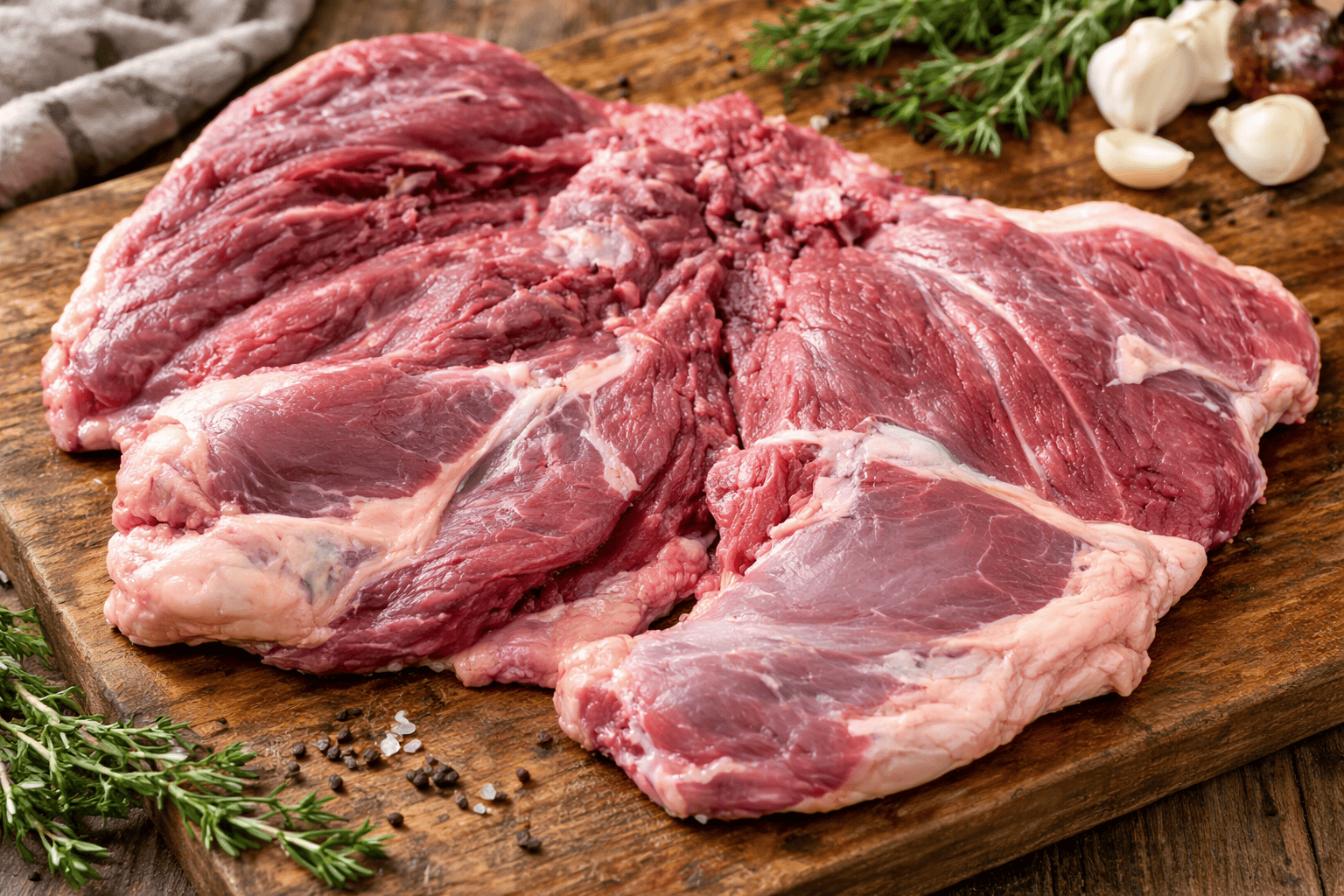
To butterfly a boneless leg of lamb, start by removing the string netting that holds it together.
You’ll want to do this anyway. If you try to season the lamb with the netting still in place, once the roast is cooked and ready to serve you’ll simply pull most of the seasoning off when you remove it.
So even if you’re not planning to stuff the lamb, remove the netting and retie it later with easy-to-remove butcher’s twine.
Open the lamb so the fat side is on the outside. Using a sharp knife, cut into the thickest parts of the meat, slicing about ¾ of the way through but not all the way. Open these cuts like a book to create a flatter, more even piece of meat.
If needed, use your hands or a meat mallet to gently pound the lamb to an even thickness. Be sure to use the flat side of the mallet, not the spiked tenderizing side.
Flattening the lamb helps the seasoning distribute more evenly and ensures the meat cooks more uniformly.
Get the Leg of Lamb Ready for Cooking
Once you have your lamb seasoned, roll it back up and tie with butcher's string at about 1 - 2-inch intervals; then stick it on the spit and tighten it firmly. (If time permits, the roast will improve with a couple of hours, or even overnight, covered in the refrigerator. Remove the meat from the refrigerator and bring to room temperature (30-minutes) before proceeding.)
To ensure you have a good hold on the meat, roll the spit with your hands and look for any unevenness in the way it turns, or movement in the turning action. Tighten more or rebalance the meat as necessary.
Now is the time to season the outside of the lamb.
It's always easier to do this once it's on the spit than trying to get it on the spit with the seasoning already done.
Something about your hands having a tendency to mess things up while trying to get the meat on the spit.
So season after the meat is firmly in place.
Rub all over with the olive oil and garlic, then sprinkle the garlic and regular salt over the top (don't worry, this will not be overly salted) and then fresh cracked black pepper, keep it pretty coarse.
Cooking the Lamb Roast
If using a grill rotisserie: Prepare the grill for indirect heat and heat to 375°F (190°C)
Insert the spit through the center of the lamb and secure it with the forks. Place the drip pan beneath where the lamb will cook. Insert the spit into the rotisserie motor and turn it on. Let it rotate for a minute to be sure the lamb is balanced and turning smoothly. Close the lid, maintain the grill temperature around 375°F (190°C), and cook for about 1½ hours, or until the internal temperature reaches 135–140°F (57–60°C) for medium-rare.
If using a countertop rotisserie: Secure the lamb on the spit according to the manufacturer’s instructions. Place the drip tray beneath the roast to catch the juices. Set the rotisserie to 375°F (190°C), or the closest temperature setting available, and allow the lamb to rotate continuously. Cook for about 1¼ to 1½ hours, or until the internal temperature reaches 135–140°F (57–60°C) for medium-rare.
No rotisserie? You can still cook it on the grill. Prepare the grill for indirect cooking and heat to 375°F (190°C). Place the lamb directly on the grill grates with a drip pan underneath. Turn the roast about every 15 minutes to help it cook evenly, until the internal temperature reaches 135–140°F (57–60°C).
No grill? (Why not?) Use the oven. Heat the oven to 375°F (190°C). Place the lamb in a roasting pan and cook uncovered for about 1 hour. Baste once or twice with the accumulated juices and continue roasting, if needed, until the internal temperature reaches 135–140°F (57–60°C).
Allow the lamb to rest for 10–15 minutes before slicing.
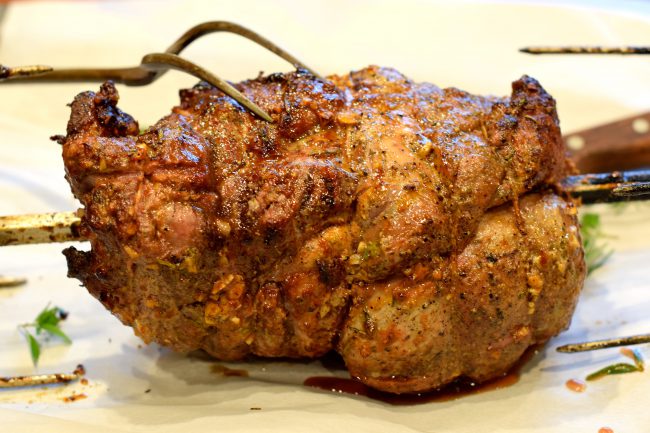
Let It Rest
I like my lamb medium-rare, which means pulling it from the heat when it reaches 135–140°F (57–60°C).
Remember, the lamb will continue to cook slightly while it rests, so this is the perfect time to take it off the grill or out of the oven.
And rest it must.
Resting allows the juices to redistribute throughout the meat. If you slice it too soon, those flavorful juices will run out onto the cutting board.
And that’s not where we want them.
Juice on the cutting board means dry meat on the plate.
Once the meat has been properly rested, remove the string
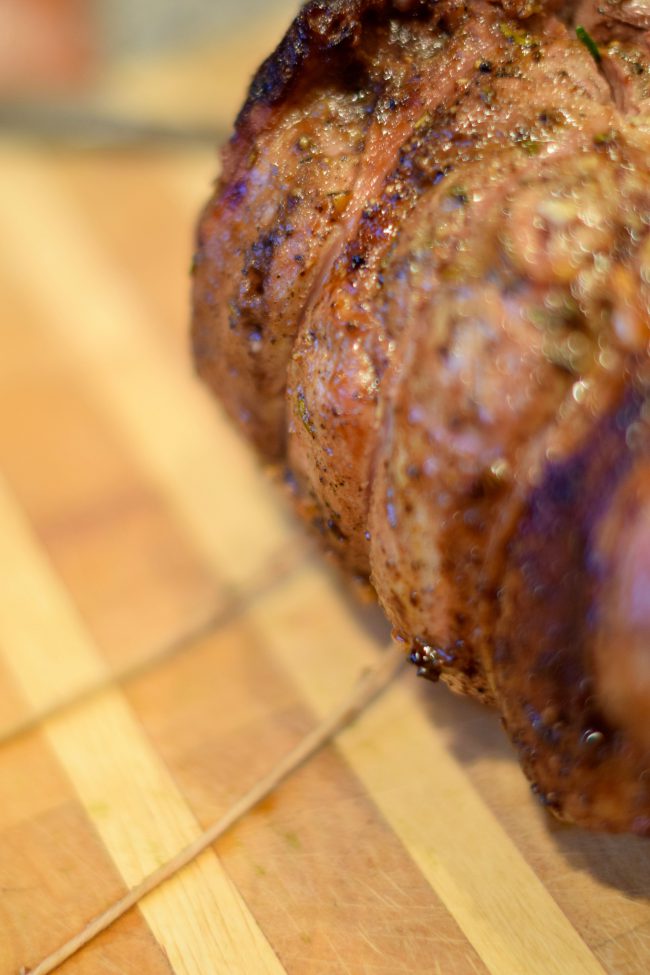
Thinly slice and serve
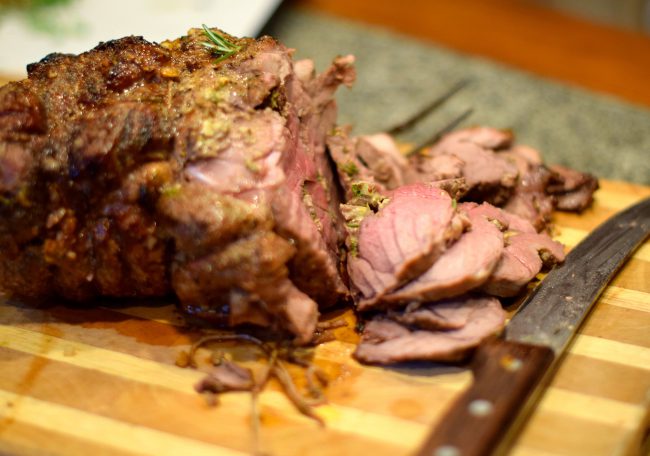
What to Serve with Rotisserie Leg of Lamb
I served this with Israeli Couscous with Favas, Feta and Mint. Other great sides might include Other sides that pair beautifully with this lamb include roasted carrots, grilled asparagus, lemon potatoes, or a simple Greek-style salad.
FAQ
Butterflying the lamb helps create a more even thickness so the roast cooks more evenly. It also gives more surface area for the garlic, mustard, and herbs to flavor the meat.
Yes. The lamb can be stuffed, rolled, and tied several hours ahead or even the day before. Keep it refrigerated and bring it to room temperature for about 30 minutes before cooking.
For medium-rare lamb, cook until the internal temperature reaches 135–140°F (57–60°C). The temperature will rise slightly as the lamb rests.
Absolutely. While the rotisserie provides even cooking and natural basting, the lamb can also be roasted in the oven or cooked on a grill using indirect heat.
Leftover lamb is excellent in gyros, wraps, grain bowls, or salads. Thin slices also reheat beautifully in a skillet with a little olive oil.
Wine Recommendations
Wine Pairing
Cabernet Sauvignon is a classic match for roasted lamb. Its firm tannins stand up to the richness of the meat, while its dark fruit and subtle herbal notes complement the rosemary, garlic, and mustard in the stuffing.
Another excellent choice is a Syrah (or Shiraz). Syrah often carries savory notes of pepper, herbs, and dark berries that echo the flavors of the lamb and herbs beautifully.
If you prefer something a bit softer, Merlot also works well. Its rounder tannins and ripe fruit provide balance without overpowering the dish.
Key pairing factors:
- rich roasted meat
- herbal seasoning (rosemary, marjoram, thyme)
- garlic and mustard depth
- medium-rare juicy texture
A medium to full-bodied red with good structure and moderate acidity will bring everything together nicely.
Thanks for Visiting, Please leave a comment on your experience.