
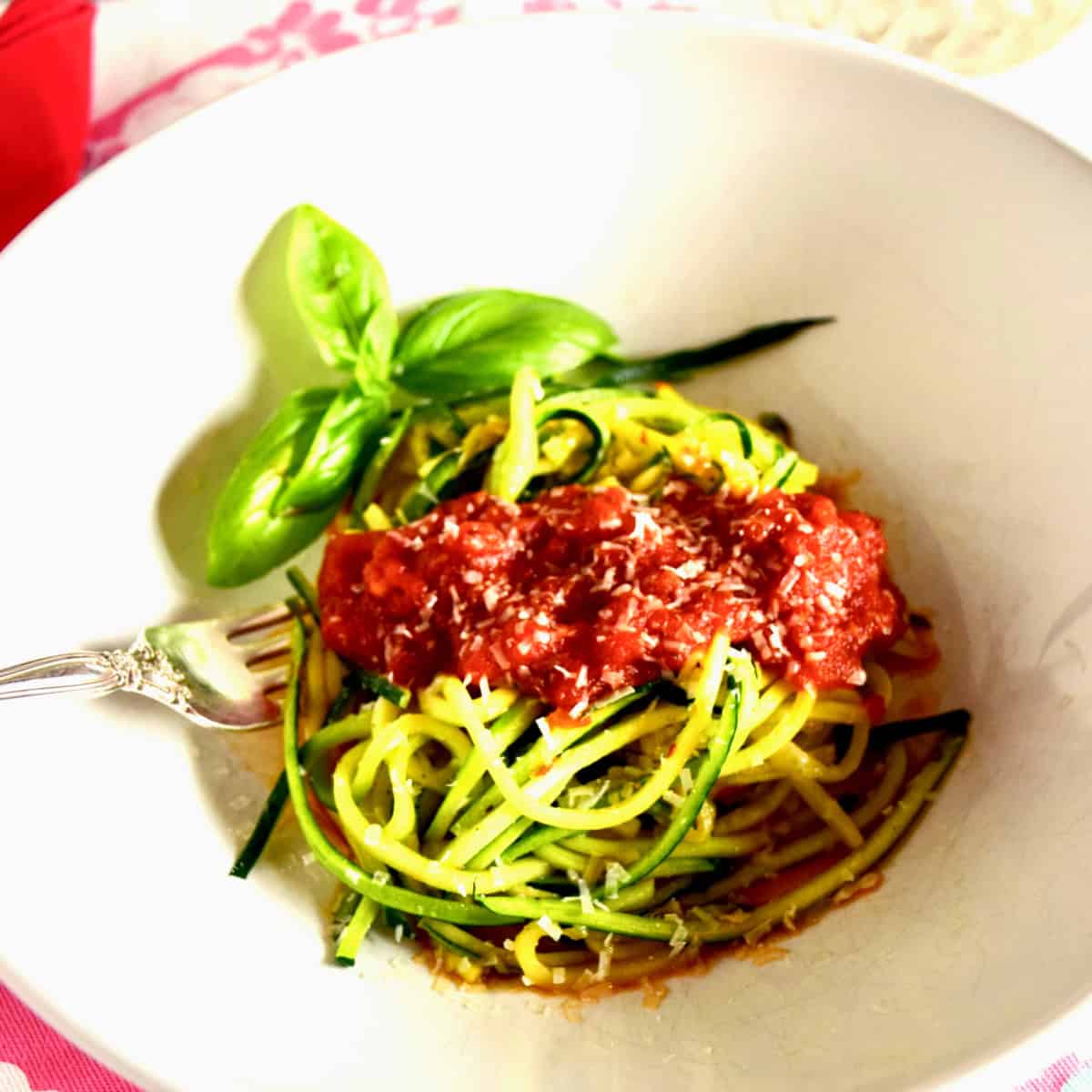
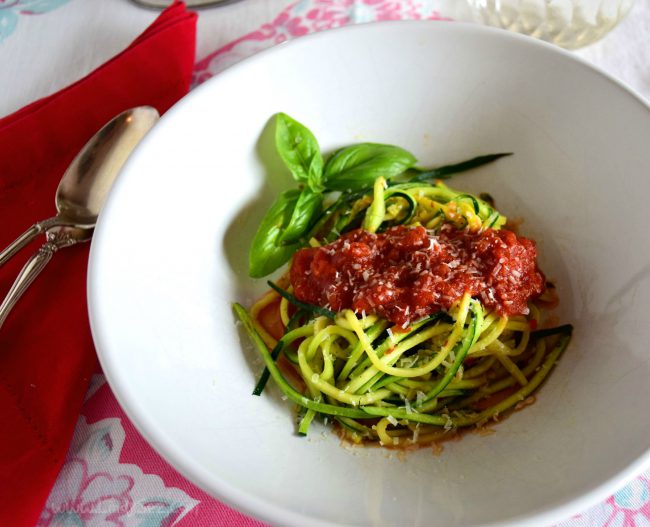
Zucchini Spaghetti with Fresh Tomato Sauce turns firm zucchini into tender, pasta-like strands, then tops them with a simple homemade marinara and freshly grated Parmesan. It’s fresh, satisfying, and ready in minutes—especially when the sauce is already made.
Why You’ll Love This Recipe
- Quick enough for lunch: The zucchini spaghetti cooks in just 3 to 4 minutes.
- Fresh but satisfying: Tender zucchini, garlicky tomato sauce, and Parmesan deliver plenty of flavor without a heavy meal.
- The texture is just right: Using the firm outer portion of the zucchini keeps the strands from becoming soft or watery.
- Naturally gluten-free: No pasta substitutes or specialty ingredients required.
- Flexible: Use sauce made with fresh tomatoes, canned tomatoes, or your favorite prepared marinara.
The Story Behind My Zucchini Spaghetti
Long before zoodles became a familiar word—and before spiralizers became a must-have kitchen gadget—I had a garden overflowing with zucchini and needed another way to cook it.
I looked at those big zucchini and thought: Why not cut the firm outer flesh into spaghetti-like strands and use them as pasta?
That became my Zucchini Spaghetti, and around 2010, I demonstrated the technique in one of the first cooking videos I posted on YouTube. As far as I have been able to determine, it was the first online video showing how to make zucchini spaghetti.
At the time, zucchini noodles were still unusual. Spiralizers weren’t filling kitchen drawers, julienne peelers weren’t promoted as “zoodle makers,” and grocery stores certainly weren’t selling containers of pre-cut zucchini noodles.
Today, zucchini spaghetti is everywhere. But this recipe goes back to the days before the trend had a name—and it’s still one of the quickest, freshest ways I know to turn an abundance of zucchini into lunch or a light dinner.
Jump to:
Zucchini Spaghetti with Tomato Sauce
Equipment
Ingredients
- 1 medium zucchini
- 1 teaspoon extra virgin olive oil
- 1 small clove garlic minced (about ½ teaspoon)
- ½ teaspoon fresh thyme
- Dash red pepper flakes (optional)
- ½ cup hot prepared marinara sauce homemade marinara or jarred
- Salt and freshly ground pepper to taste
- Fresh grated Parmesan cheese
Instructions
Cut the Zucchini
- Trim the ends from the zucchini. Using a mandolin fitted with the julienne blade, cut the firm outer flesh lengthwise into long, spaghetti-like strands. Turn the zucchini as you work, stopping when you reach the soft, seedy center.A spiralizer, julienne peeler, or sharp knife will also work, although the size and texture of the strands will vary.
Gently cook the garlic
- Heat the olive oil in a large sauté pan over medium heat. Add the garlic and cook for about 30 seconds, just until fragrant. Do not let it brown.
Saute the zucchini
- Add the zucchini strands and a pinch of salt. Cook for 3 to 4 minutes, tossing frequently, until the zucchini is tender but still has some bite. Avoid overcooking, or the strands will become soft and release too much water.
Season and serve
- Add the thyme and red pepper flakes, if using, and toss to combine. Taste and season with salt and freshly ground pepper.Transfer to a warmed plate or shallow bowl. Top with the hot tomato sauce and freshly grated Parmesan, then serve immediately.
Notes
Notes
- Have the tomato sauce hot before cooking the zucchini; the zucchini takes only a few minutes and should be served immediately.
- Use a wide skillet so the zucchini sautés rather than steams. If doubling the recipe, cook it in two batches.
- Spoon the sauce over the zucchini rather than simmering them together, which can make the zucchini watery and overly soft.
- Zucchini vary considerably in size. One medium zucchini should yield about 2 generous cups of strands before cooking.
Nutrition
My video of how to cook Zucchini Spaghetti
The Mandoline, the Handguard, and My Fingers
When I made the original video, I didn’t use the handguard—and yes, viewers have scolded me about it ever since.
There was a reason. The prongs on my handguard would have dug into and ruined one side of the zucchini before I could cut it into long, even strands. I knew exactly how sharp the mandoline was, worked slowly, and stopped well before my fingers reached the blade.
Still, mandolines deserve enormous respect. Use the handguard when possible, or wear a cut-resistant glove. No zucchini noodle is worth contributing a fingertip to dinner.
If a mandoline makes you nervous—or you simply don’t own one—a spiralizer or julienne peeler will also do the job.
Three Reasons I Don’t Use a Spiralizer
Spiralizers are popular for making zucchini noodles, but they aren’t my first choice.
1. I want strands, not springs - A spiralizer creates long, curly coils. I prefer flatter, straighter strands that resemble spaghetti and cook more evenly in the skillet.
2. The zucchini has to fit - Spiralizers limit the size of the zucchini you can use. Anyone who has grown zucchini knows that it can go from charmingly small to suitable for home defense almost overnight. Those oversized zucchini are excellent candidates for zucchini spaghetti, and a mandoline handles them easily.
3. I want control over the core - The soft, seedy center releases more water and becomes mushy quickly. A spiralizer may incorporate too much of it. With a mandoline, I can turn the zucchini as I work and stop precisely where the firm flesh ends.
The Julienne Peeler: A Very Good Second Choice
A julienne peeler is inexpensive, easy to store, and less intimidating than a mandoline. It makes thinner strands than I prefer for zucchini spaghetti, but it certainly works.
Those fine strands are especially good for my Raw Zucchini Salad, although even there, I prefer the slightly sturdier texture produced by my mandoline.
Whichever tool you choose, keep the strands mostly uniform, leave the watery center behind, and please keep all ten fingers out of the sauce.
Tips for Success
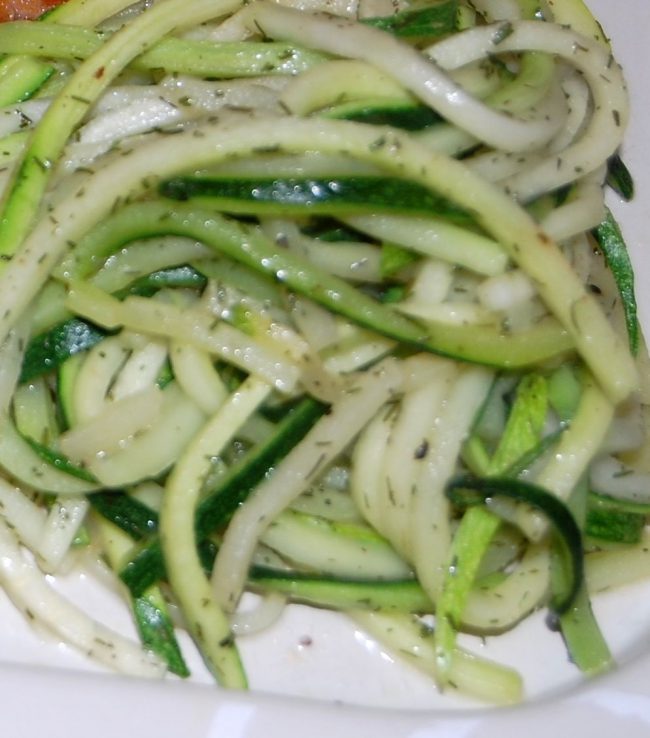
- Don’t overcook the zucchini. Cook just until tender with a little bite. Once it softens too far, it releases water and quickly becomes mushy.
- Leave the center behind. The soft, seedy core contains the most moisture and won’t hold its shape like the firm outer flesh.
- Use a wide, hot skillet. Give the strands room to sauté rather than steam. If doubling the recipe, cook the zucchini in batches.
- Cut evenly sized strands. Uniform zucchini spaghetti cooks at the same rate, so you don’t end up with some strands raw and others limp.
- Use a flavorful olive oil. With so few ingredients, its flavor makes a noticeable difference.
- Choose fresh herbs. Fresh thyme or basil brings a brighter, cleaner flavor than dried herbs in this quick-cooking dish.
- Have the sauce hot and ready. The zucchini cooks in minutes and waits for no one.
- Sauce the top, not the pan. Spoon the tomato sauce over the zucchini rather than cooking them together; simmering zucchini in the sauce can make it watery.
- Serve immediately. Zucchini spaghetti continues to soften as it sits.
- Finish with freshly grated Parmesan. It melts better and has considerably more flavor than pre-grated cheese.
FAQs
No. The skin adds color and helps the strands hold their shape. Just wash and dry the zucchini before cutting it.
Absolutely. This recipe is meant to be quick, so use a good jarred marinara when that suits your schedule. Homemade sauce made with fresh or canned tomatoes will give you a fresher flavor.
Sauté minced garlic briefly in olive oil and a little butter. Add peeled, diced fresh tomatoes, fresh basil, salt, and pepper, then cook until the tomatoes soften and form a light sauce. For more detailed instructions, see my recipe for homemade marinara made with fresh or canned tomatoes.
You can cut the zucchini into strands several hours ahead. Refrigerate them in a covered container lined with a paper towel, then cook just before serving. Once cooked, zucchini spaghetti is best eaten immediately.
Yes. Choose firm, straight yellow squash and prepare it exactly as you would the zucchini. Its texture will be slightly softer, so watch the cooking time carefully.
Don’t throw it away. Chop it and add it to soup, pasta sauce, scrambled eggs, a frittata, or a vegetable sauté. It’s especially good in my Curry Zucchini Soup.
Yes, although it will have a firmer, crisper texture. For slightly softer zucchini spaghetti without sautéing, toss the strands with a little salt and let them sit for 10 to 15 minutes, then gently pat them dry. Raw zucchini strands work particularly well with pesto or another uncooked sauce. For this tomato sauce recipe, I prefer briefly sautéing them.


bb says
so healthy
so good for you.