
A Classic Caprese Salad is the simplest way to get some sunshine in your mouth.
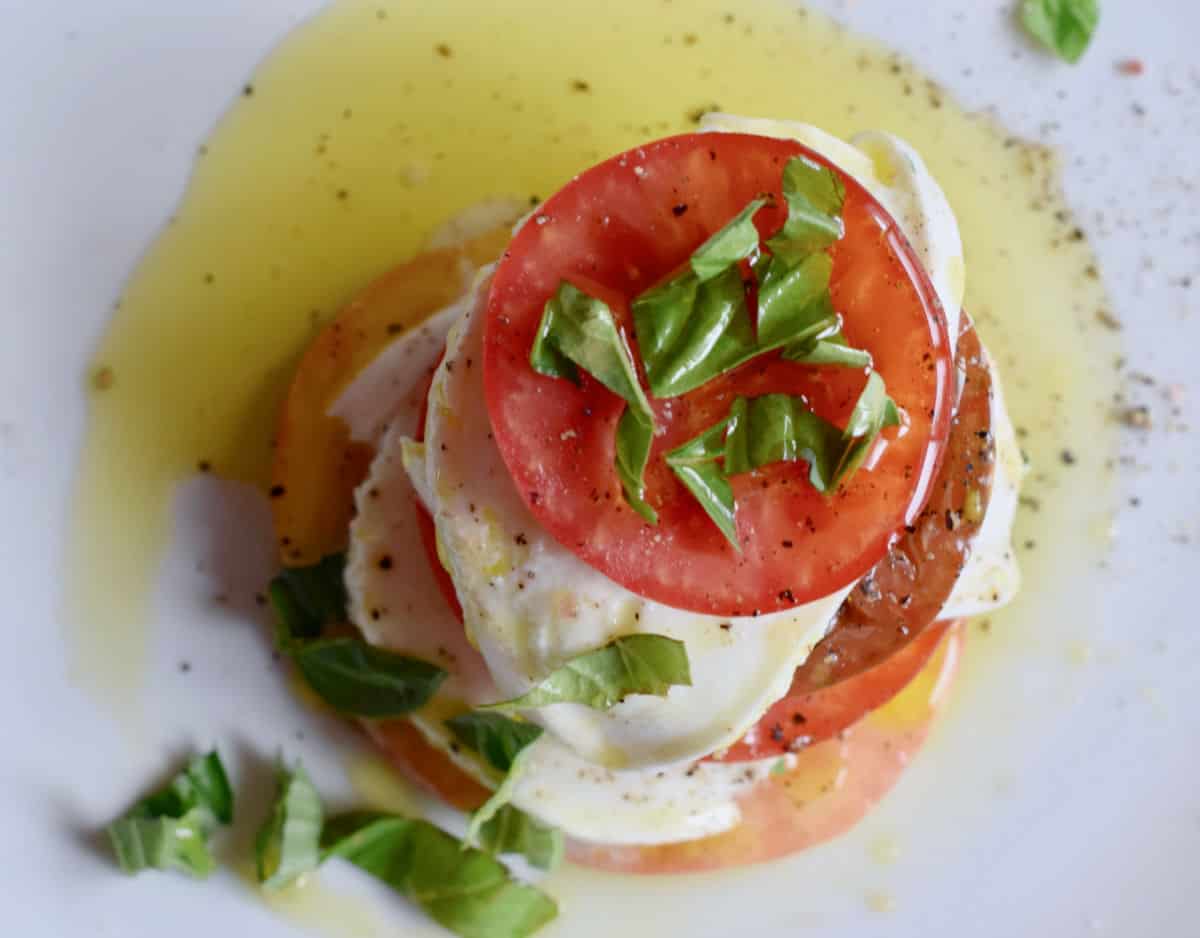
Why You’ll Love This Classic Caprese Salad
- Peak-season simple – just a handful of ingredients, but each one pulls its weight
- No cooking required – slice, layer, drizzle, done
- Ingredient-driven – a great way to showcase those summer tomatoes you waited all year for
- Light and fresh – clean flavors, nothing heavy or fussy
- Flexible presentation – stacked, layered, or spread out on a platter
Or try putting it on a stick for a fun and different presentation.
The Story
A Classic Caprese Salad is one of those dishes that feels almost too simple to write down. Tomato, mozzarella, basil, olive oil…done, right?
Well…not always.
I’ve had Caprese salads that completely missed the mark—watery, flavorless out-of-season tomatoes, bland cheese, oil that tasted like, well, nothing. And when there are only four ingredients on the plate, there’s nowhere to hide.
For me, this salad really came into its own after a visit to the Kendall-Jackson Tomato Festival, where I discovered just how wildly different tomatoes can be. Sweet, acidic, rich, almost smoky—suddenly that “simple” salad had layers.
Now, I lean into that. Different colors, different textures, all doing their thing on one plate. Add creamy fresh mozzarella, a few good basil leaves, and a fruity olive oil, and you’ve got something that tastes like summer decided to show off a little.
Classic Caprese Salad with Fresh Mozzarella and Basil
Ingredients
- 3 large heirloom tomatoes, sliced thick mix colors if you can
- 4 ounces fresh mozzarella sliced into 8 slices, preferably Buffalo mozzarella
- 8 large basil leaves
- 4 tablespoons fine extra virgin olive oil
- Salt and freshly ground pepper to taste
- ¼ cup fresh basil shredded, (optional)
Instructions
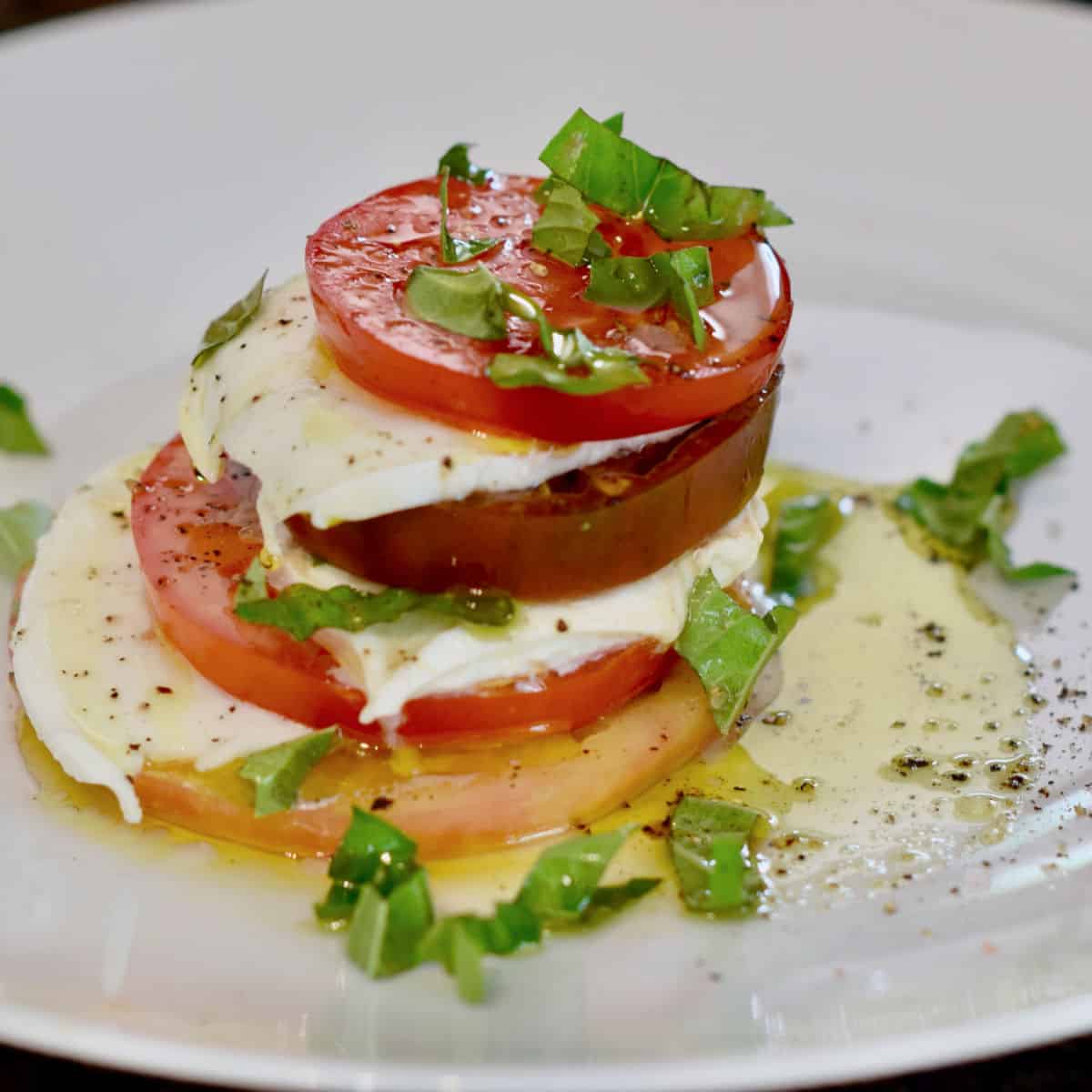
- On a plate, layer tomato → basil → mozzarella. Repeat, finishing with tomato.Season each layer lightly with salt and pepper.Drizzle with olive oil.Finish with extra basil if using. Serve immediately.
Notes
- Tomatoes: ripe, never refrigerated
- Mozzarella: fresh, packed in brine—not the shreddy stuff
- Olive oil: fruity or peppery—this is where the flavor lives
Nutrition
Buying and Storing Heirloom Tomatoes
Caprese is one of those dishes that reminds you why summer tomatoes matter. When ingredients are this simple, quality becomes everything.
These days, it’s easy to find a good mix of heirloom tomatoes at the grocery store and even better ones at farmers' markets. Look for tomatoes that are vibrant in color, slightly firm but with a little give, and free of bruises or soft spots.
And whatever you do—don’t refrigerate them. Cold temperatures dull their flavor and turn the texture mealy. Keep tomatoes on the countertop, out of direct sun, stem side down, and give them a little space. They like to breathe.
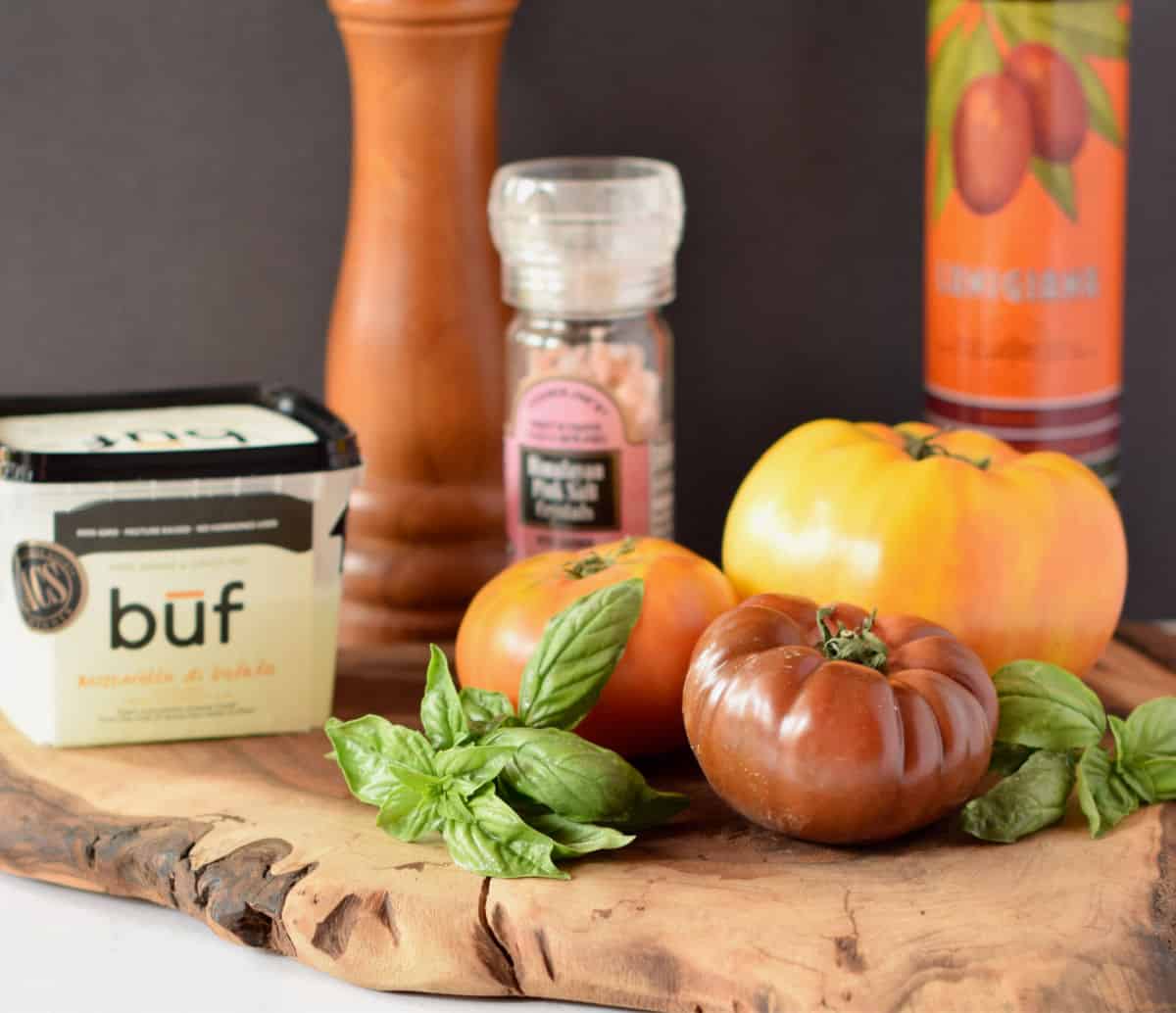
The Ingredients (Why They Matter)
With a Classic Caprese Salad, there’s nowhere to hide—so every ingredient has to show up.
Tomatoes
This is the star. Use ripe, in-season tomatoes—the kind that smell like a tomato before you even slice into them. Heirlooms are ideal for their range of sweetness, acidity, and texture. Garden, farmers market, or a good local source at the store—just make sure they’re worth eating on their own.
Mozzarella
Go for fresh, soft mozzarella, preferably buffalo if you can find it. It should be delicate, milky, and packed in brine. This is not the place for the firm, low-moisture cheese you’d shred for pizza—it won’t give you that creamy contrast.
Basil
It has to be fresh basil—no substitutes here. Large leaves make for a pretty layered presentation, but smaller leaves work just as well. You can leave them whole or give them a quick chiffonade and scatter them through the layers.
Olive Oil
Use a high-quality extra virgin olive oil—this is a finishing oil, not a cooking oil. It’s added at the end, so you actually taste it. Look for something fruity or lightly peppery, the kind that has real flavor.
This isn’t the place for the bargain bottle, but you also don’t need to go overboard—a solid $20–$30 bottle is perfect.
If you don’t use olive oil often, storing it in the refrigerator will help prevent it from going rancid. Just take it out about 10–15 minutes before using so it loosens back up.
Salt and Freshly Ground Coarse Pepper
Don’t skip this step. Salt wakes up the tomatoes, pulling out their natural sweetness, while pepper adds a little edge. It also gives the mozzarella a boost—because let’s be honest, mozzarella brings creaminess, not a ton of flavor.
Season lightly as you build, then finish with a final pinch and a generous twist over the top.
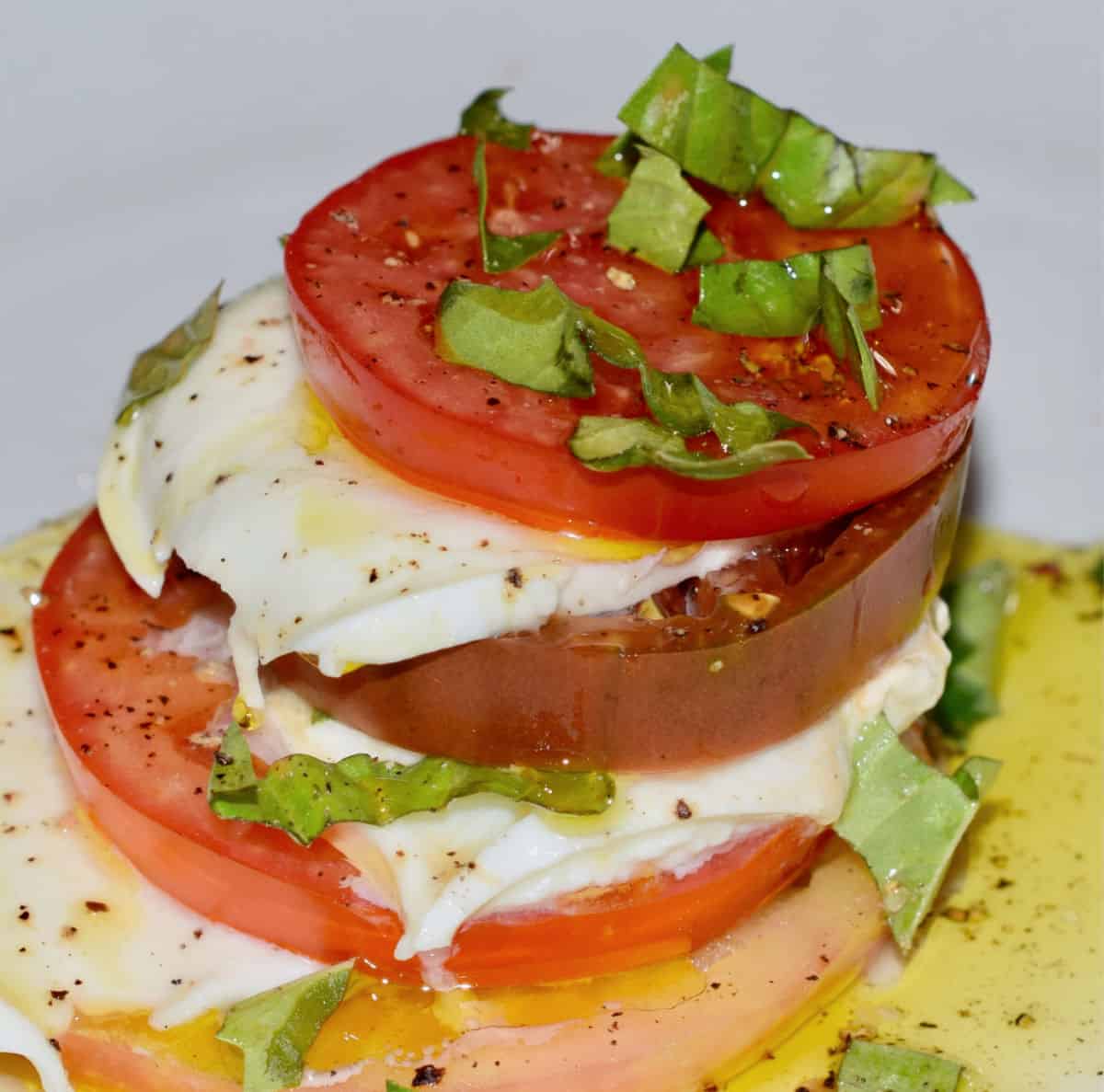
That's it. That's the best way to enjoy this deliciously simple Caprese Salad made with tomato/mozzarella/basil/olive oil.
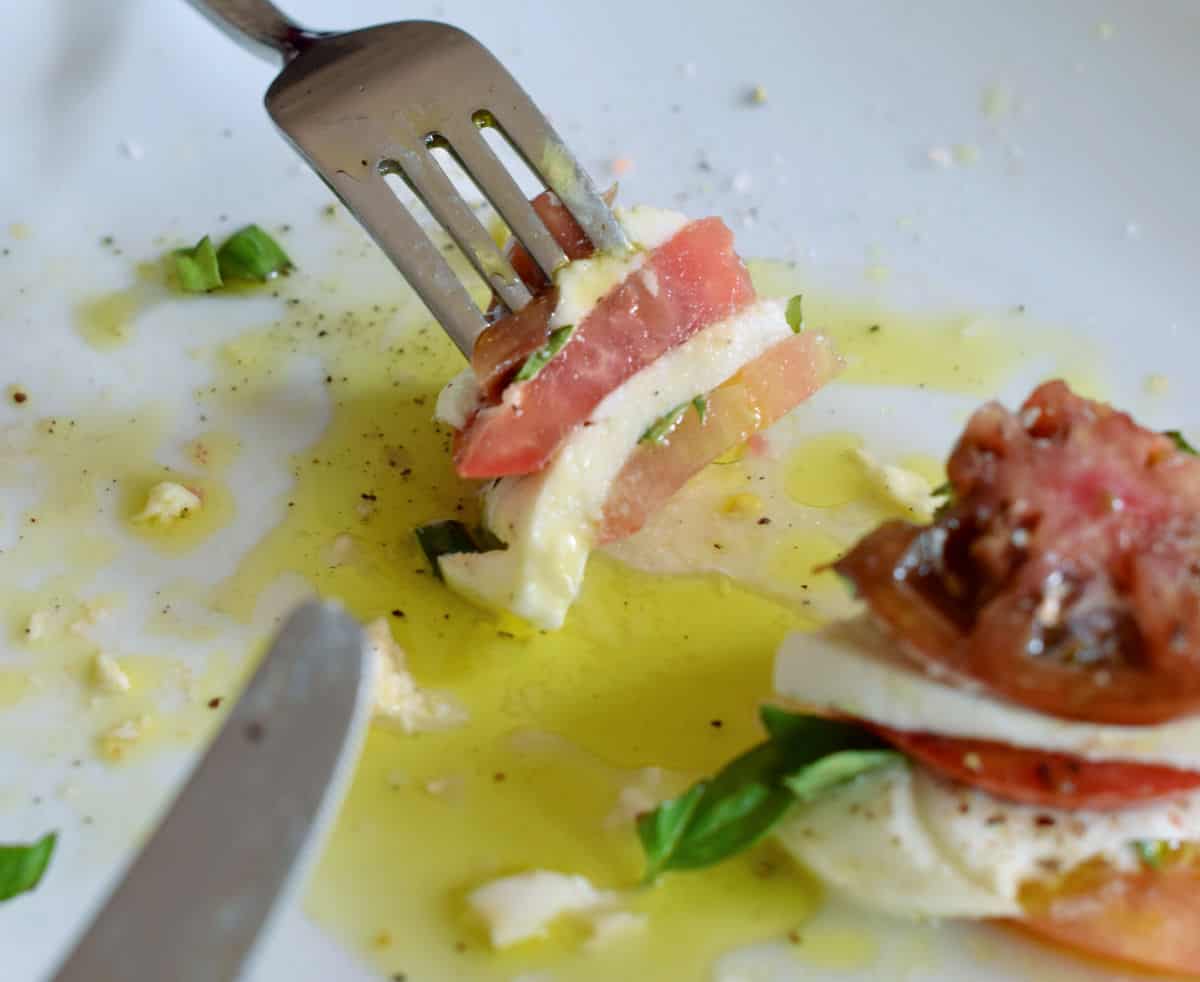
A perfect bite!
FAQs
Because it doesn’t need it. A true Caprese is about tomatoes, mozzarella, basil, and olive oil—clean and balanced. Balsamic can overpower that freshness and add unnecessary acidity.
That said, if you’re working with off-season tomatoes that lack flavor, a light drizzle of balsamic can help fill in the gaps. Just use it sparingly.
Not exactly. Color gives you clues, but it’s not a guarantee.
Darker tomatoes (deep reds, purples, blacks) tend to be richer and slightly less acidic
Lighter ones (yellow, orange) are often milder and a bit sweeter
But the real test? Smell and feel—a ripe tomato should be fragrant and have a little give when gently pressed.
No—and they shouldn’t be. A mix of sizes and varieties adds texture, flavor, and visual appeal. Just slice them so they’re of similar thickness, so each bite stays balanced.
Tomatoes release liquid once sliced and salted. To manage it:
Slice just before serving
Lightly salt, don’t overdo it
If needed, let slices sit briefly on a paper towel before plating
Not really. This is a last-minute salad. You can slice components ahead, but assemble and season right before serving so it stays fresh, not soggy.
Fresh mozzarella packed in brine—soft, milky, and delicate. Buffalo mozzarella if you can find it. Skip anything firm or pre-shredded.
No. Caprese is best served at room temperature. Cold dulls the flavor of the tomatoes and tightens up the mozzarella, taking away that soft, creamy texture.
If your ingredients have been refrigerated, just let them sit out for 15–20 minutes before assembling. It makes a noticeable difference in both flavor and texture.
Wine Recommendations
Wine Pairings for Caprese Salad
Caprese is all about acidity (tomatoes), creaminess (mozzarella), and herbal freshness (basil). So you want wines with bright acidity, freshness, and little to no oak.
- Pinot Grigio – light body, crisp acidity, clean citrus notes that let the tomatoes shine
- Sauvignon Blanc – herbal notes mirror the basil, high acidity cuts the cheese beautifully
- Dry Rosé – fresh red fruit + acidity balances both the tomatoes and creamy mozzarella
- Unoaked Chardonnay – round enough for the cheese, but still fresh and not heavy
If you’re stretching this into a meal (BBQ,Backyard BBQ grilled meats):
- Chianti – tomato-friendly acidity with enough structure to stand up to grilled flavors
Keep it fresh, not oaky, not heavy—this isn’t the place for a big, buttery wine.
Thanks for Visiting, Please leave a comment on your experience.