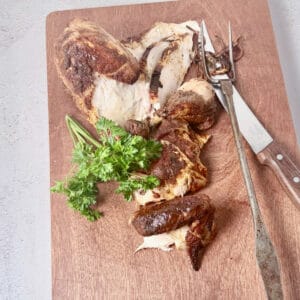
Better than Costco Easy Rotisserie Chicken
A simple herb-and-lemon brine keeps this homemade rotisserie chicken exceptionally juicy, while slow cooking over indirect heat produces beautifully browned, crisp skin. Fresh from the grill, it’s even better than Costco.
Equipment
Ingredients
For the Brine
- 2 quarts cold water, divided
- ½ cup kosher salt
- ½ cup granulated sugar
- 1 large lemon halved
- 2 large sprigs of fresh thyme
- 1 sprig rosemary
- 1 bay leaf torn
- 12 whole black peppercorns
For the Chicken
- 1 whole chicken, 4 - 5 pounds
- freshly ground black pepper
- Salt free herb blend or seasoning of choice
Instructions
Make the brine
- Place 1 quart of the water in a large, deep container. Add the kosher salt and sugar and stir until dissolved. Squeeze in the lemon juice, then add the lemon halves, thyme, rosemary, bay leaf, and peppercorns. Add the remaining quart of cold water.
Brine the chicken
- Remove the giblets and trim away any excessive fat. Submerge the chicken in the brine, breast-side down. Refrigerate for up to 8 hours.
Prepare the grill
- Set up the grill for indirect heat and preheat it to 325–350°F. Position a drip pan beneath the area where the chicken will rotate.
Prepare the chicken
- Remove the chicken from the brine; do not rinse it. Pat it thoroughly dry inside and out. Thread it onto the rotisserie spit, secure both sets of prongs firmly, tuck the wings behind the back, and tie the legs together with kitchen twine.
Season
- Season the chicken all over with black pepper and a salt-free herb blend. Because the chicken has been brined, it shouldn’t need additional salt.Cook: Attach the spit to the rotisserie and start the motor. Cook over indirect heat for 60–90 minutes, keeping the grill between 325°F and 350°F. Check occasionally to make sure both the spit and the chicken are turning smoothly.
Check for doneness
- The chicken is ready when the thickest part of the breast reaches 165°F and the thigh reaches 170–175°F. Avoid touching bone when inserting the thermometer.
Rest and carve
- Wearing heat-resistant gloves, carefully remove the spit from the grill. Transfer the chicken to a cutting board and remove the spit. Rest for 15 minutes before carving.
- LindySez: This is one time you may want to eat the skin—it’s crisp, deeply seasoned, and one of the best reasons to make your own rotisserie chicken.
Notes
Note: Nutritional value may not be 100% accurate.
Recipe Notes
- Check the label: Don’t brine a chicken labeled enhanced, self-basting, or contains a solution; it may become overly salty.
- Use the right salt: This recipe uses ½ cup (about 70 g) Diamond Crystal kosher salt. Other kosher salts are denser, so substitute by weight—not volume.
- Dry skin browns best: Pat the chicken very dry after brining. For even crisper skin, refrigerate it uncovered for 1–4 hours before cooking.
- Skip additional salt: Use black pepper and a salt-free herb blend after brining.
- Center the chicken: Position it evenly on the spit and tighten the prongs securely so the chicken rotates smoothly without straining the motor.
- Cook over indirect heat: Keep the burners or coals away from directly beneath the chicken and place a drip pan below it to prevent flare-ups.
- Cook by temperature, not time: Chicken size, grill temperature, and outdoor conditions affect cooking time. Check both the breast and thigh with an instant-read thermometer.
- Watch the first few rotations: Make sure the spit is turning—and that the chicken is turning with it. We know why this note is here. 😏
Nutrition
Serving: 1 servingCalories: 412kcalProtein: 33gFat: 30gSaturated Fat: 8gPolyunsaturated Fat: 18gCholesterol: 174mgSodium: 510mg
Tried this recipe?Let us know how it was!